





Introduction
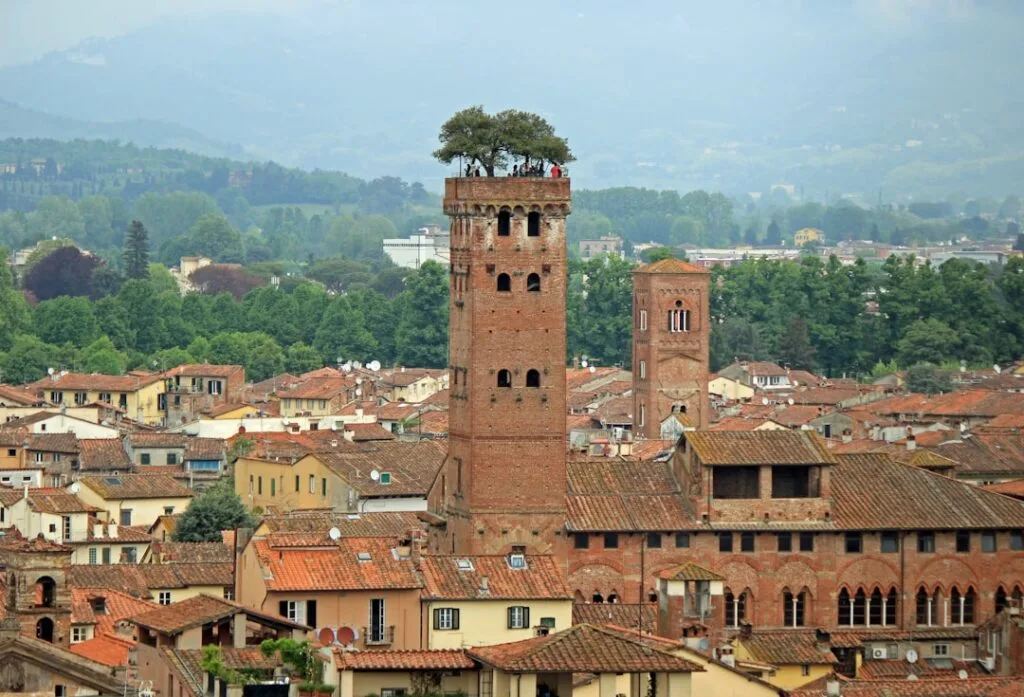
Lucca is a Tuscan gem that surprisingly lends itself to urban sports, especially running. Tucked behind its perfectly preserved medieval walls, Lucca offers a one-of-a-kind playground where history, architecture and nature meet. Running here isn’t just about racking up miles: it’s a full sensory plunge into cobbled lanes, plazas framed by cafés, centuries-old trees and vistas of red-tiled roofs. A typical runner’s route includes the promenade along the city walls (Passeggiata delle Mura di Lucca), cutting through historic squares like Piazza dell’Anfiteatro, and climbing to viewpoints such as Torre Guinigi — stops that naturally turn effort into contemplative pauses and unforgettable scenes.
Whether you’re a local runner looking for a new route or a traveler wanting to mix cardio with cultural discovery, this guide gives you everything you need to jog around Lucca’s medieval center. You’ll find detailed routes, clear descriptions of monuments you’ll pass, exact addresses to note, opening hours if you plan to visit after your workout, plus practical tips on gear, safety, water stops, and the best times to run to avoid summer heat or tourist crowds. We’ll also cover how to respect the heritage — how to move along the walls, where to avoid bike congestion, and which spots are best for stretching in peace.
Running in Lucca also means adapting to changing surfaces: ancient cobbles, stone slabs, and packed-earth trails under the boulevards’ tree canopies. We’ll explain how to adjust your stride and shoe choice, where to grab a coffee and a healthy snack after your session, and which places to visit to recover post-run (thermal baths, gardens or easily accessible museums). Finally, you’ll get the practical plan: how to reach Lucca station, where to park, entrance fees for main monuments like Torre Guinigi and Torre delle Ore, and contacts for local services (left-luggage, public showers, sports shops).
Ready to lace up and head out for a run that blends pace with history? Follow this step-by-step route and learn how to turn a simple run into a memorable sporting stroll through Lucca’s medieval core.
Main route: the walls-and-old-town loop (about 6 km)
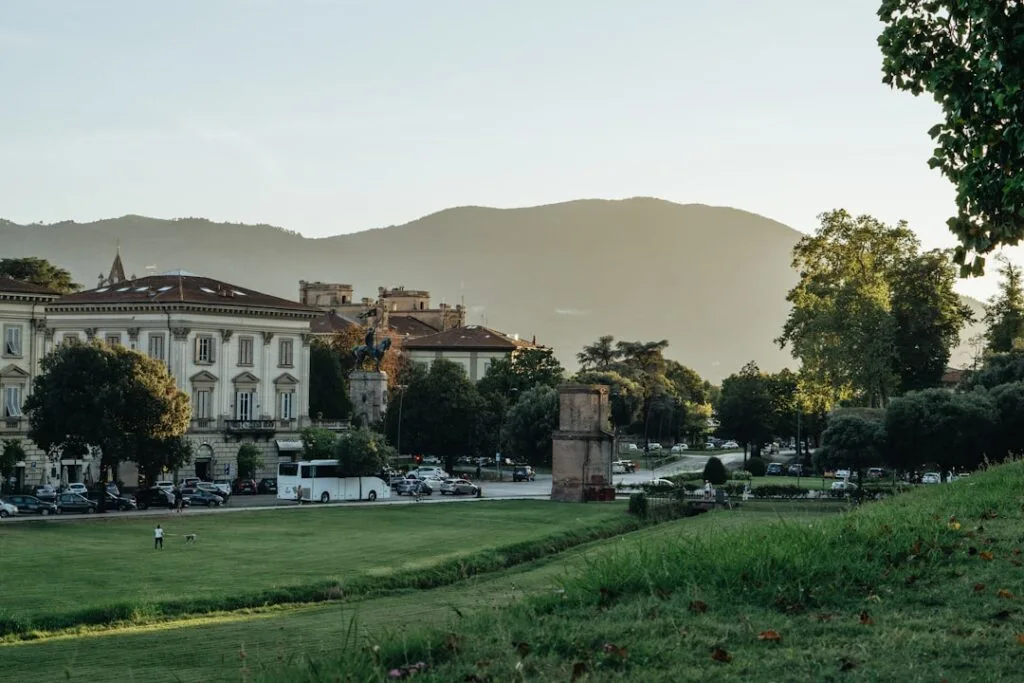
The classic loop for runners in Lucca starts and finishes on the city walls: the Passeggiata delle Mura di Lucca. About 4 km long, the promenade alternates grassy stretches, paved sections and occasional gravel — perfect for a steady run with minimal jarring. Recommended starting point: Porta Santa Maria, Via Sant’Anna, 55100 Lucca (practical coordinates: 43.8420° N, 10.5025° E). From this gate you can go clockwise or counterclockwise, adjusting distance to your level.
Suggested route (full loop, ~6 km with small detours):
- Start: Porta Santa Maria, Via Sant’Anna — head up onto the walls and begin the panoramic promenade.
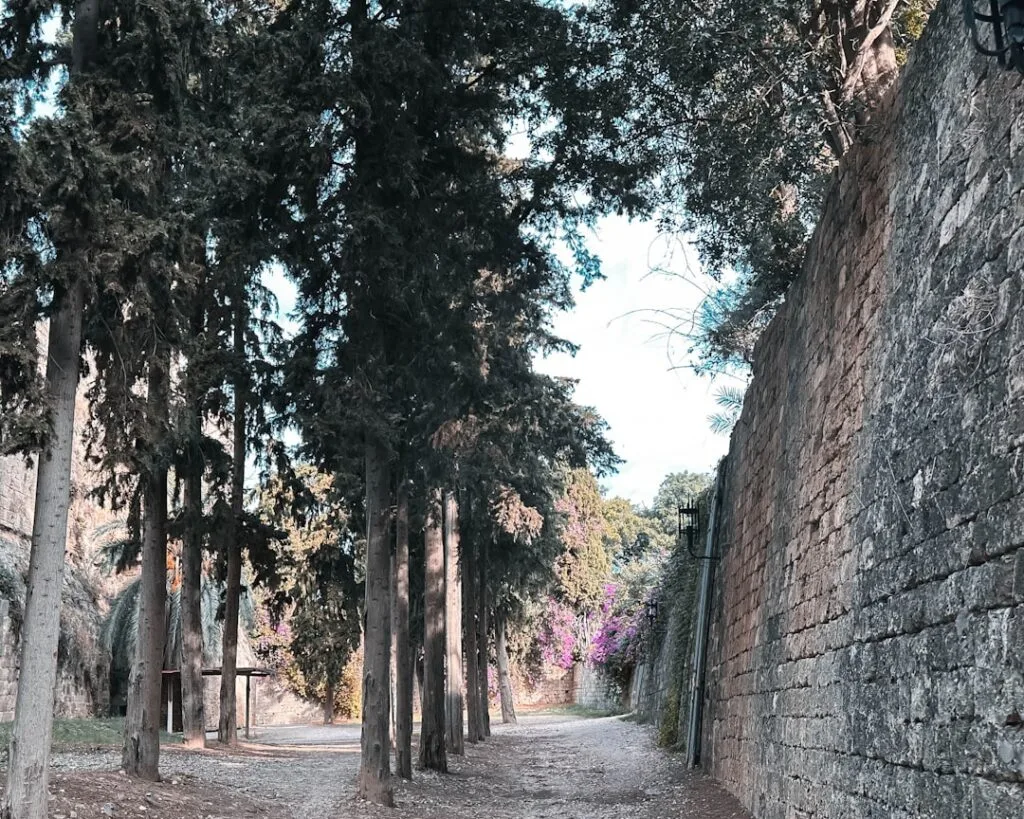
- Walls → Porta Elisa: a shaded stretch under plane trees, great for interval work.
- Drop down to Piazza San Michele → Via Fillungo: a historic, cobbled section — watch out for narrow sidewalks.
- Piazza dell’Anfiteatro, Piazza San Martino (Cathedral of San Martino, Piazza San Martino, 55100 Lucca), then climb toward Torre Guinigi (Via Sant’Andrea, 39, 55100 Lucca).
- Return via Via Fillungo and Via Vittorio Veneto to get back to the original gate.
Along the route you’ll pass specific sites with schedules and practical info:
- Cattedrale di San Martino — Piazza San Martino, 55100 Lucca. Typical opening hours: 9:30–19:00 (may vary with seasons and services). Entry to the church is free; some chapels and the Blessed Sacrament may ask for a small donation or ticket (around €2–3 for temporary exhibitions).
- Piazza dell’Anfiteatro — Piazza dell’Anfiteatro, 55100 Lucca. Oval square built atop a Roman amphitheater’s ruins, open 24/7 and free to access.
- Torre Guinigi — Via Sant’Andrea, 39, 55100 Lucca. Typical hours: 10:00–18:00 (April–September 9:00–19:00). Climbing fee: roughly €4–6 for adults; reduced €2–4 for students and seniors. Opening can depend on weather because of the rooftop greenery.
Practical tips for this route:
- Best time: early morning (6:30–8:30) to enjoy cool temperatures and soft light, and to beat the tourist crowds that usually arrive after 10:00.
- Surface: choose shoes with good cushioning but stable on cobbles. Shorten your stride on cobbled sections to avoid slips.
- Hydration: public water points along the walls and fountains in Piazza San Michele and Piazza San Martino. Bring a bottle if you plan to run over an hour.
- Safety: the walls promenade is generally safe; stay alert for cyclists and pedestrians. Respect signs that ban bikes in certain stretches.
 Click here to book your guided tour of Lucca’s city walls
Points of interest to weave into your session: monuments, addresses and opening hours
Beyond the loop, adding short stops at monuments gives your run a cultural layer. Here’s a selection of precise spots with addresses, hours and prices to plan your breaks:
Torre delle Ore (Clock Tower)
Address: Via Fillungo, 55100 Lucca.
Hours: generally 10:00–18:00 (may close on winter Mondays).
Price: about €4 adults, €2 students, free for under 6s.
Description: Lucca’s tallest medieval tower features narrow staircases and a rooftop view over the city. Great for stair-repeat workouts (short bursts). Try 3 climbs with jogging recoveries at the base.
Palazzo Pfanner
Address: Via degli Asili, 33, 55100 Lucca.
Hours: 9:00–19:00 (varies off-season).
Price: garden and museum entry roughly €5 adults, €3 reduced.
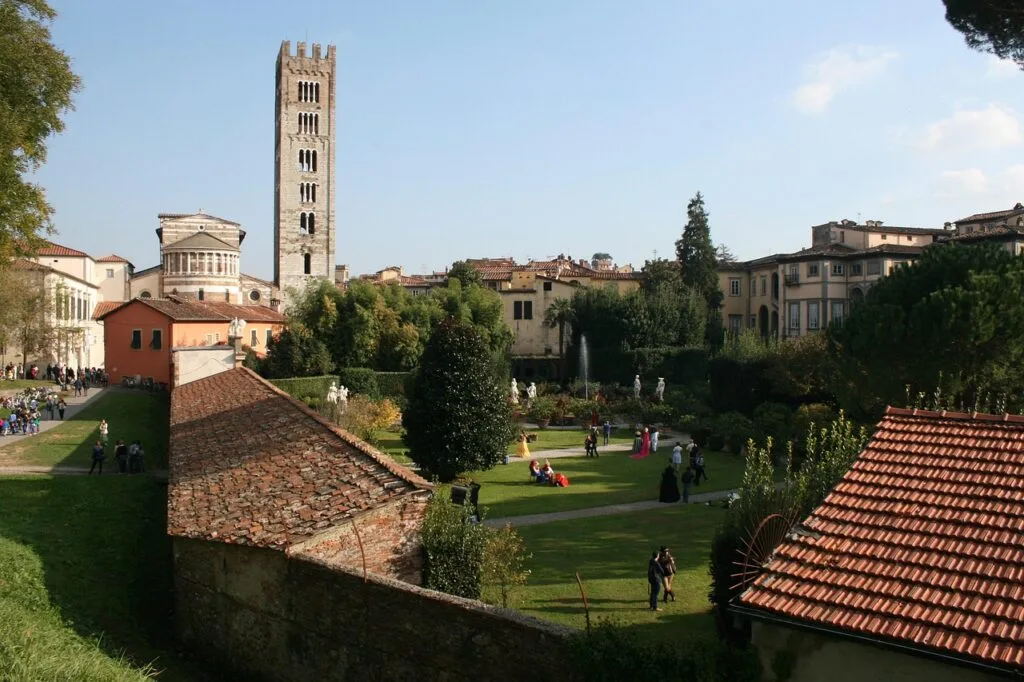
Description: an 18th-century façade and baroque garden perfect for cooling down. After a hard session, lie back on the lawn or stretch along the central alley. Check opening times if you want to go inside.
Basilica di San Michele in Foro
Address: Piazza San Michele, 55100 Lucca.
Hours: 9:00–18:30 (longer summer hours possible).
Price: basilica entry is free; some exhibitions may ask for a donation.
Description: the ornate marble façade is worth a photo stop; the square often hosts markets and terrace cafés — ideal for a post-run espresso.
Orto Botanico Comunale di Lucca
Address: Via del Giardino Botanico, 55100 Lucca (near Parco Villa Reale).
Hours: generally 9:00–17:00 (variable).
Price: free entry or voluntary donation.
Description: a small botanical garden for post-run yoga or shaded stretches — prized for its calm and coolness.
Tips for integrated visits:
- If you plan to enter monuments after running, bring a light change of clothes and a towel. Some sites, like Torre Guinigi and Torre delle Ore, involve many stairs — avoid climbing them immediately after an intense interval session if you feel dizzy.
- Book tower tickets in high season (July–August) to skip lines. Online tickets for Torre Guinigi are available via the official municipal site or at local ticket offices (indicative prices: €4–6).
- Respect mass times at the Cattedrale di San Martino if you plan to go inside, to avoid disturbing services.
Click here to buy your ticket for Villa Reale di Marlia
Local practical tips: gear, safety, fueling and access
Running in Lucca has a few local quirks. Here’s everything to know for a smooth, enjoyable session.
Recommended gear
- Shoes: a mixed road/trail shoe is ideal (good grip on cobbles plus cushioning for the walls).
- Accessories: a belt or small bottle, a lightweight helmet if you plan to cycle back, and a GPS watch to map your intervals.
- Clothing: breathable tee, light windbreaker for cool mornings, and a small towel for a cafe refresh afterward.
Safety
- Best times: early morning (6:30–8:30) or early evening (18:00–20:00) outside of summer to avoid heat.
- Lighting: the walls loop is well lit but some inner alleys can be dim at night — pick well-lit routes for evening runs.
- Theft: travel light with valuables; the main station is Piazza Riscatto, 55100 Lucca — if you arrive by train, leave luggage in the Stazione di Lucca left-luggage (hours and rates vary: automated lockers about €3–6).
Hydration and fueling
- Water points: public fountains along the walls and on main squares. Cafés will offer tap water if you buy something.
- Post-run spots: recommended cafés — Caffè Di Simo, Via Fillungo 162 (open 7:30–20:00), and Pasticceria Lorenzi, Via Fillungo 195 (open 7:00–20:00) for a cappuccino and local focaccia. Expect about €2–4 for a coffee and €3–5 for a typical pastry.
- Light meals: trattorias like Trattoria Da Leo, Via Della Fratta 1, usually open for lunch and dinner; main courses around €10–15.
Getting there and parking
- Train: Stazione di Lucca — Piazza Riscatto, 55100 Lucca. The station is a 10–15 minute walk from the walls.
- Car parking: Parcheggio Porta Elisa (Viale Giuseppe Garibaldi) and Parcheggio Piazza Napoleone. Rates: roughly €1.50–2.00/hour; daily €10–15 depending on season. Prefer parking outside the walls for a calmer run arrival.
Useful local services
- Main pharmacy: Farmacia Comunale Lucca, Via Fillungo 152, open 9:00–13:00 and 16:30–20:00 (times may vary).
- Sport shop: Decathlon Lucca, Via del Brennero, 55100 (hours 9:00–20:00), for shoes, electrolytes or forgotten accessories.
Click here to rent a bike for the day in Lucca
Training plans and route variations (beginner to advanced)
Adjust the route and workload to your level. Here are three sample plans (beginner, intermediate, advanced) that work well in the medieval center and on the walls.
Beginner — 30 to 40 minutes
Goal: base endurance and discovery.
Route: start at Porta Santa Maria → 2 km on the walls (steady pace) → drop to Piazza dell’Anfiteatro for 5 minutes of walking and photos → back on the walls to finish. Total: 4–5 km.
Tips: break into 2-minute walks every 8–10 minutes, and do gentle stretches after 5–8 minutes of recovery.
Intermediate — 45 to 60 minutes
Goal: tempo and cobble technique.
Route: complete walls loop (4 km) at a sustained pace, then 10 minutes of intervals on Via Fillungo (30 s hard / 90 s easy) → climb Torre delle Ore for 3 stair sets. Total: 6–8 km.
Tips: watch surface changes; keep a short turnover on cobbles to reduce impact.
Advanced — 60 to 90 minutes
Goal: long intervals and urban elevation work.
Route: two partial laps of the walls (8 km), followed by a loop through nearby streets (Via Romana, Via Fuligno), repeated climbs of Torre Guinigi or the Torre delle Ore stairs (4–6 ascents) → cool-down in Palazzo Pfanner garden. Total: 10–12+ km depending on variation.
Tips: plan nutrition and regular hydration, and check tower opening times if you intend to climb.
Green option: include the Orto Botanico and parts of Parco di Villa Reale to add grassy surfaces and gentle elevation. Cultural option: walk between running segments to briefly visit the Cathedral of San Martino or the Museo Nazionale di Villa Guinigi (Via della Quarquonia, 1 — hours 9:00–19:00, indicative price €6).
Conclusion
Running in Lucca’s medieval center blends workout and cultural immersion seamlessly. The city is perfect for varied sessions: long, gentle promenades on the walls, stair repeats in medieval towers, technical runs on cobbles in the historic core, and recovery moments in baroque gardens. With iconic sites like the Passeggiata delle Mura di Lucca, Piazza dell’Anfiteatro, the Cathedral of San Martino (Piazza San Martino, 55100 Lucca), Torre Guinigi (Via Sant’Andrea, 39, 55100 Lucca), Torre delle Ore (Via Fillungo, 55100 Lucca) and Palazzo Pfanner (Via degli Asili, 33, 55100 Lucca), every run becomes an exploration.
To make the most of your outings, plan around weather and season: favor mornings in summer and take advantage of longer monument hours in spring and autumn. Bring a bottle, match your shoes to the cobbles, respect rules on the walls (bike bans on certain sections, protect urban furniture), and carve out time for a coffee and final stretch in a local pastry shop like Pasticceria Lorenzi (Via Fillungo 195) or a terrace café. Don’t forget to check monument hours if you want to climb towers — Torre Guinigi and Torre delle Ore often require a ticket (expect €4–6 depending on season), and time slots can change.
Above all, remember balance: Lucca is best read at the pace of steps and breath. Running here opens the city in a different way, combining physical effort with the sensory experience of a living medieval center. Whether you want structured training, a fun outing, or a sport-culture combo, Lucca will welcome you on its walls, squares and towers, leaving you with lasting images and sensations. Enjoy your run and happy exploring!