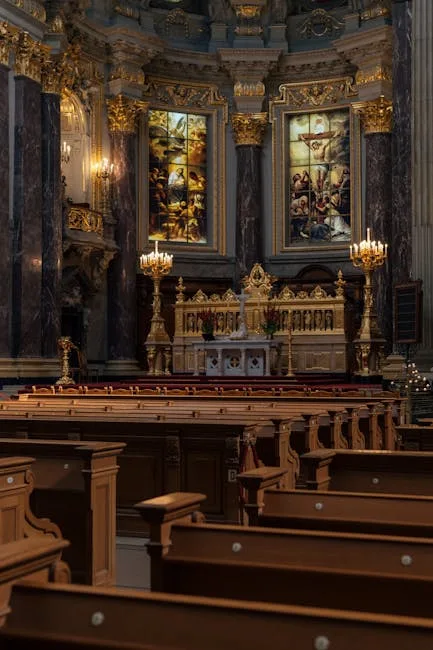





Introduction — Photographing Religious Architecture in Lucca
Lucca is a Tuscan town whose perfectly preserved medieval center is a playground for anyone interested in photographing religious architecture. Wandering the cobbled lanes, looking up to discover a Romanesque facade, a Gothic portal, or a Byzantine-like mosaic feels like stepping into a gallery where every building tells a story. For photographers — hobbyists and pros alike — Lucca offers the advantage of a remarkable concentration of sacred places within easy walking distance: cathedral, basilicas, parish churches and small oratories appear one after another, often within a few hundred meters. The texture of local stone, the changing light through the day, and the contrast between serene interiors and lively squares create countless creative opportunities.
This guide focuses on Lucca’s main religious buildings, providing practical information (exact addresses, opening hours, admission fees), shooting tips (recommended lenses, camera settings, best times of day) and local etiquette. I’ll also point out less obvious but highly photogenic spots like cloisters, side chapels and viewpoints from nearby towers. The aim is to help you plan a one-day scouting route or a multi-day itinerary — whether you’re after sunrise shots, decorative details in raking light, or scenes that combine people and market life.
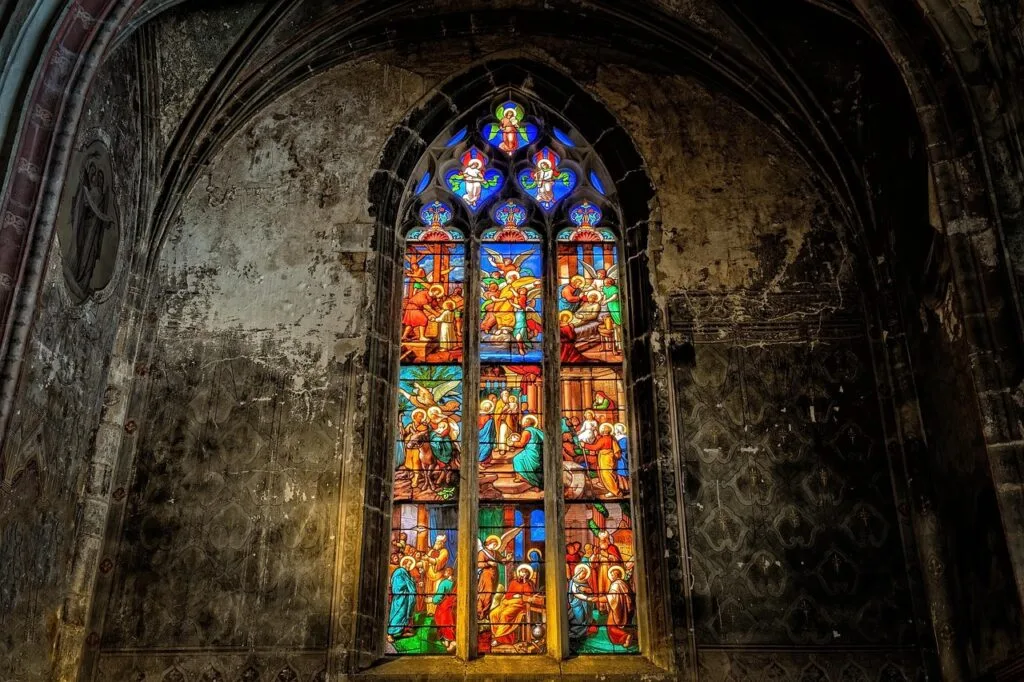
Shooting religious buildings in Lucca also requires sensitivity to the sacred nature of these places and local rules: covering shoulders and knees may be needed, photography can be forbidden during services or in certain chapels, and flash use is often restricted. This guide includes those details so your practice is both creative and respectful. Finally, I offer visual cues to help you search for reference images on free photo sites (Pexels, Unsplash, Pixabay) so you can anticipate angles and moods you want to recreate. Charge your batteries, pack your lenses, and let’s set out to photograph Lucca’s sacred treasures.
 Click here to book a private guided tour of Lucca
Cattedrale di San Martino — Square and Interior, Addresses, Fees and Photo Tips
Full name: Cattedrale di San Martino (Cathedral of Saint Martin)
Address: Piazza San Martino, 55100 Lucca LU, Italy
Typical opening hours: usually 10:00–18:00 (check for seasonal variations and liturgical celebrations). The cathedral may open earlier for morning Mass; consult the local website or parish office to confirm.
Price: Entry to the cathedral is free, but access to the Museo della Cattedrale / Opera del Duomo (museum and bell tower climb) is ticketed: around €6–€8 for the museum plus tower ascent (rates vary; reduced prices for students/seniors).
The Cattedrale di San Martino is the must-see starting point for photographing Lucca’s religious heart. Its irregular Romanesque facade, featuring a portal sculpted by Nicola Pisano and a richly detailed bell tower, yields beautiful sculptural details in the early morning or late afternoon when raking light brings out the relief. Inside, the space combines Baroque chapels and medieval works: the Volto Santo (the famous venerated wooden crucifix) is kept in the sacristy; its presence often means strict photo rules (no flash, maintain silence).
Photography tips:
- Lenses: a wide-angle (16–35 mm) for interior volumes and for fitting the facade into narrow streets; a telephoto 70–200 mm to isolate sculptural details and bas-reliefs.
- Settings: interiors can be dim: raise ISO progressively (400–1600 depending on your camera) and shoot with a wide aperture (f/2.8–f/4), or use a discreet tripod if permitted. Be mindful that flash is prohibited in some chapels.
- Best times: the first hour after opening and the last hour before closing are ideal. For crowd-free shots, favor morning services or weekdays out of high season.
- Details to look for: the main portal, the Baroque pulpit and the Volto Santo sculpture make excellent close-ups full of texture and history.
Click here to book a guided tour of San Martino and Frediano
Basilica of San Frediano and San Michele in Foro — Contrasting Styles and Street Scenes
Basilica of San Frediano
Address: Piazza San Frediano, 55100 Lucca LU, Italy
Hours: generally 8:00–19:00 (may vary with season and services)
Price: free entry; donations accepted for upkeep.
Chiesa di San Michele in Foro
Address: Piazza San Michele, 55100 Lucca LU, Italy
Hours: often 10:00–18:00 (check local opening days)
Price: free entry; small contributions possible for special guided visits.
San Frediano Basilica stands out for its large golden mosaic (11th century) on the facade — highly photogenic when shot backlit at sunset. Piazza San Frediano buzzes with cafes, markets and passersby, providing a human foreground to architectural compositions. Inside, the basilica keeps a simple, luminous atmosphere, great for silhouettes and backlit prayer scenes.
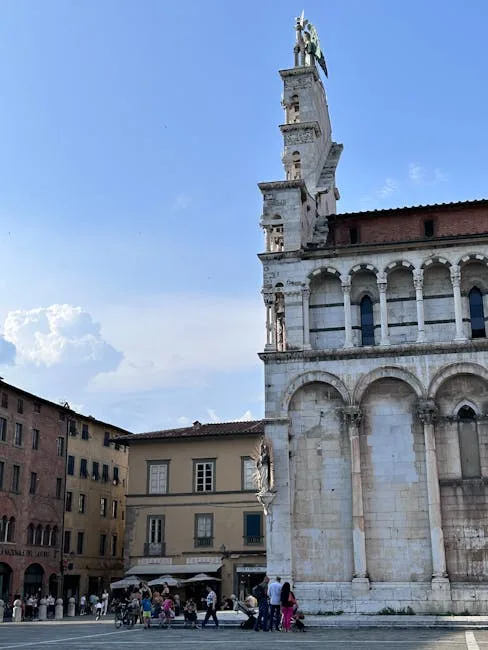
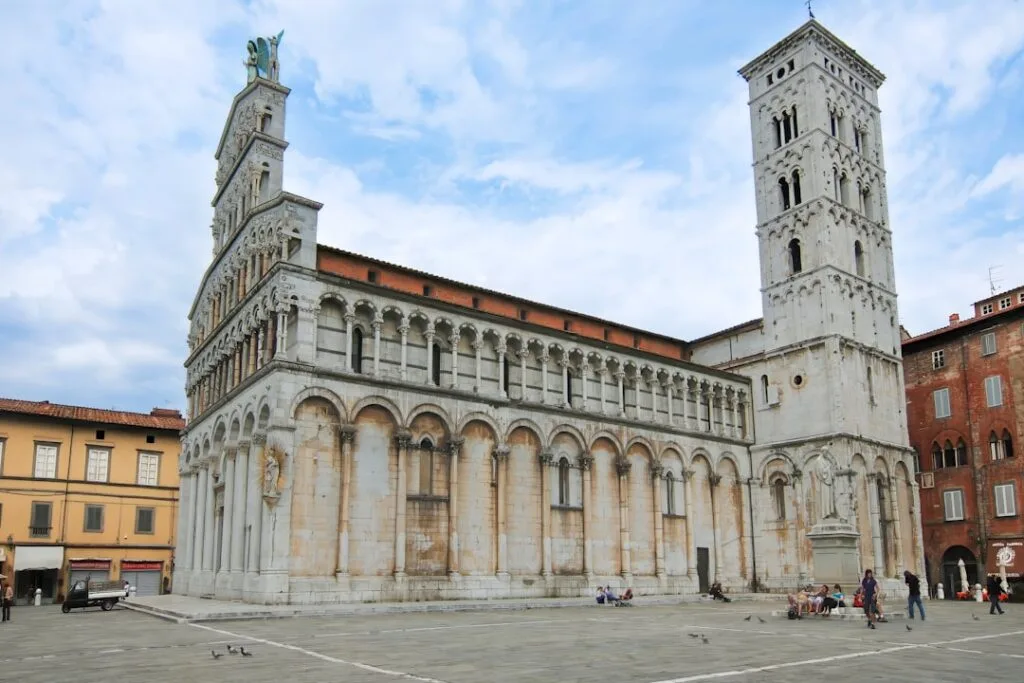
San Michele in Foro sits on the site of the ancient Roman forum and features a spectacular marble facade with multiple arcades and sculptures. Its prominent central position makes it a strong subject for compositions that include urban space: oblique angles from adjacent alleys, backlighting on statues, or tight shots of the carved portals. These two sites prove that religious architecture photography isn’t limited to interiors: the relationship between church and square, ambient light and the motion of people around them are narrative elements to exploit.
Practical tips:
- For San Frediano’s mosaic, use a slightly warmer white balance (3000–4000K) to bring out the golds.
- Shoot early in the morning to avoid harsh shadows on San Michele in Foro’s facade; the golden hour in the evening is perfect for San Frediano’s mosaic.
- Respect areas reserved for services and avoid angles that show worshippers praying without permission.
Click here to discover Lucca’s highlights on foot
Torre Guinigi, Cloisters and Small Chapels — Views, Panoramas and Architectural Details
Torre Guinigi
Address: Via Sant’Andrea, 45, 55100 Lucca LU, Italy
Hours: generally 09:00–19:00 (extended hours in high season; last entry often 30 min before closing)
Price: around €5–€7 to access the tower (rates vary; discounts for children/students).
Although Torre Guinigi isn’t a religious building, its height and tree-topped terrace offer essential panoramas for photographing Lucca’s roofs and bell towers, including the silhouette of the Cattedrale di San Martino and the many churches scattered across the old town. Climbing at sunrise gives you soft light on terracotta roofs and interesting low-angle shots to frame spires and campaniles.
Cloisters and small chapels — for example the Chiostro dei Canonici near the Duomo or the Chiostro di San Francesco — are precious for detail photography: carved capitals, worn columns, and the play of shadow and light in the galleries. These enclosed spaces lend themselves to minimal compositions and texture studies. Also look for wooden doors, ironwork and Latin inscriptions — perfect subjects for a series of tight detail shots.
Technical tips:
- For Torre Guinigi views, use a standard lens (35–50 mm) for a natural perspective, or a telephoto (70–200 mm) to compress planes and isolate bell towers and facades.
- Don’t forget a polarizing filter to cut reflections on wet roofs and to deepen the sky on clear days.
- Inside cloisters, favor a compact tripod if access is allowed; otherwise raise ISO and use slower shutter speeds while bracing against walls to avoid motion blur.
Rules of Respect, Permissions and Local Advice for Photographing
Photographing sacred places requires both creative judgment and ethical awareness. Here are rules and recommendations to know before you press the shutter:
- Respect services: Do not photograph during Masses or ceremonies. If you’re caught shooting during a celebration, wait politely until it’s over.
- Flash and tripods: Flash is often forbidden inside (to protect artworks and preserve the atmosphere). Tripods may be allowed in specific spaces for long exposures, but always ask at the welcome desk or with the caretaker. If you don’t have permission, raise ISO and stabilize using breathing and contact points.
- Dress and behavior: Modest clothing is recommended (cover shoulders and knees in some churches). Keep your voice low and avoid dramatic posing or lying down for an angle when worshippers are present.
- Professional permissions: If your work is commercial (portfolio, editorial, image sales), request written authorization from parishes or tourist offices. Diocesan museums or the Museo della Cattedrale may require specific fees for professional photography.
Practical local tips:
- Buy a pass or book online for Torre Guinigi and the Museo della Cattedrale in high season to skip lines.
- Carry small change (€) for donations and tickets; some places accept cards, but not all.
- Market days (Piazza Anfiteatro and nearby) are great for combining local life with monuments, but squares can get crowded: arrive early.
- Opening times: many small parish churches close over lunch (13:00–15:30); plan accordingly to maximize access.
Click here to book a walking tour of the historic center
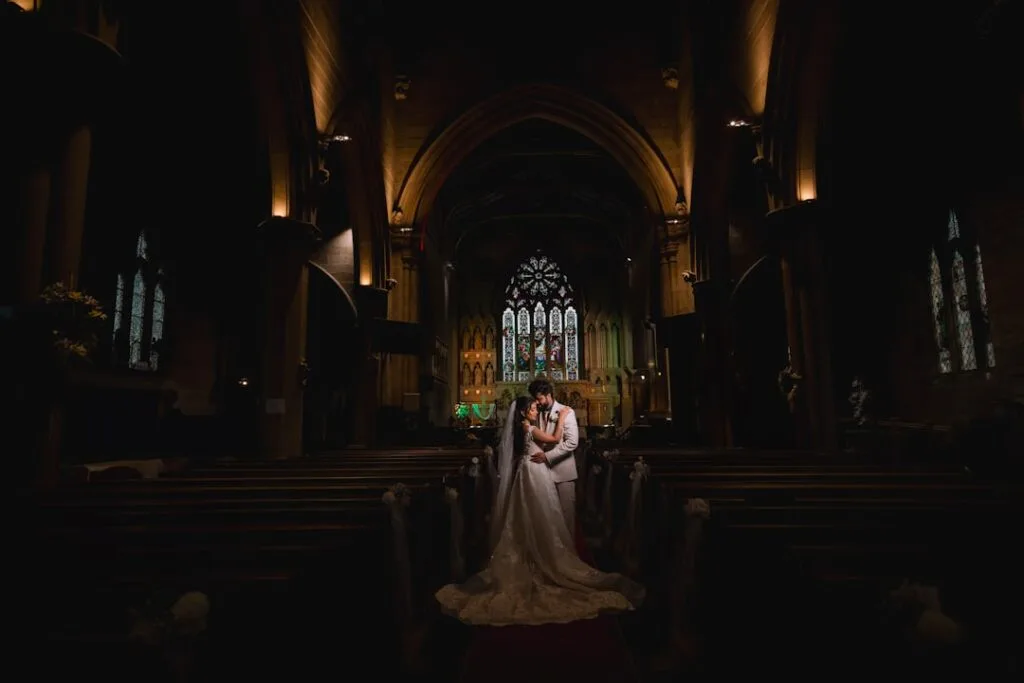
Conclusion — Photographer’s Route and Final Tips
To summarize a photographic route in Lucca: start early at the Duomo di San Martino to capture the facade and interior before the crowds; then head to the Basilica di San Frediano to take advantage of the golden mosaic at dusk or in the evening; plan a climb up Torre Guinigi for a panorama at sunrise or late afternoon; slot San Michele in Foro between these visits to alternate between wide piazza compositions and tight detail shots. Reserve a half-day to explore cloisters and small chapels for sculptural details and textures. If you’re staying several days, revisit the same spots at different hours to vary light and mood.
Above technical rules, the best religious architecture photograph combines light, respect and storytelling: look for the little human moments (a child’s shout, an old man praying, a couple on a bench), but always capture them with sensitivity. Prepare your gear (batteries, memory cards, lenses), check specific opening times for the day, and get permits if you need long exposures or commercial use. Lucca rewards patience: its stones tell centuries of history and offer photographers timeless images charged with spirituality and Tuscan simplicity.
Click here to book the guided walk on Lucca’s walls