





Introduction
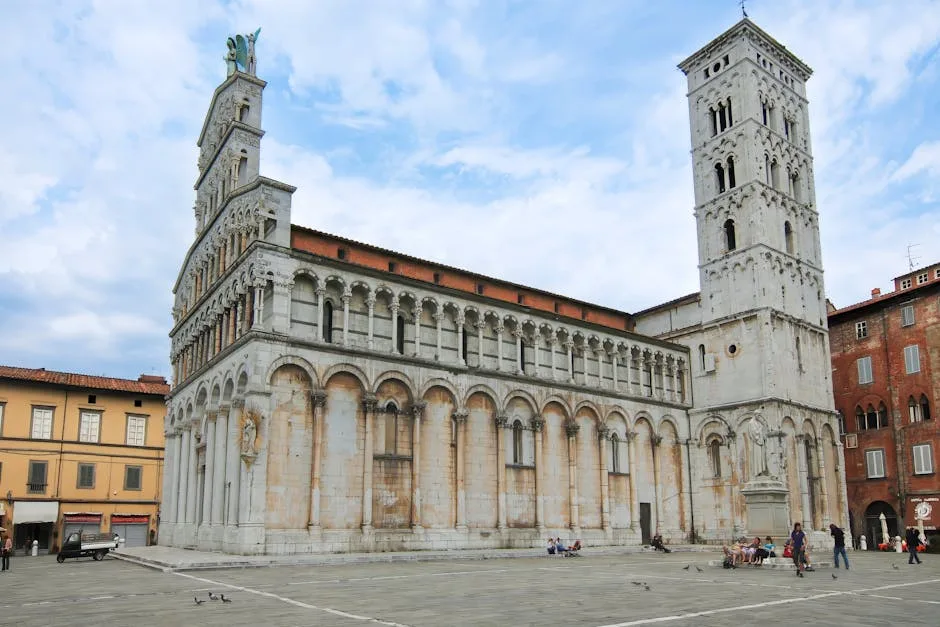
The San Martino Cathedral in Lucca (Cattedrale di San Martino) is one of Tuscany’s religious and artistic gems — a place where medieval history, Romanesque art and local legends meet in the heart of a well-preserved city. Located on Piazza San Martino, 55100 Lucca LU, Italy, the cathedral commands a lively square lined with cafés and palazzi, and it’s a must-see stop for anyone visiting Lucca. More than just a church, San Martino is a living museum: its uneven façade, richly decorated chapels, the famous Venerable Relic of the Volto Santo (Holy Face) and the sculpted tomb of Ilaria del Carretto tell centuries of local history and artistic dedication.
Lucca is a walled city known for its easygoing lifestyle, medieval alleyways and religious heritage. San Martino sits in this historic setting as a cultural and spiritual landmark. From its origins in the 4th century through the successive rebuildings of the 11th to 14th centuries, San Martino preserves architectural layers — from Romanesque to Gothic — making it a privileged witness to the religious and aesthetic transformations of central Italy.
In this in-depth guide I’ll walk you through the cathedral with practical information, exact addresses, indicative opening hours and ticket prices, plus local tips to make the most of your visit. Whether you’re an art lover, a pilgrim seeking quiet, or a photographer chasing unique angles, this article will give you the keys to understand and appreciate the richness of San Martino and its immediate surroundings.
We’ll cover the architectural and artistic history, major works inside, liturgical and devotional aspects (including the Volto Santo), and practical routes to fit the cathedral into a day in Lucca. Prices and hours are indicative and based on public sources and local practice; it’s recommended to check the latest updates before you go, especially during religious holidays or cultural events. Finally, I’ll share photography tips, the best times of day to visit, and how to combine this stop with nearby sights like the Torre Guinigi and the church of San Michele in Foro.
Throughout this article you’ll also find visual markers
placed to help illustrate each section and make the discovery more immersive. Get ready to step into the vibrant history of San Martino Cathedral, where every stone seems to hold Lucca’s collective memory.
History and architectural evolution of San Martino Cathedral
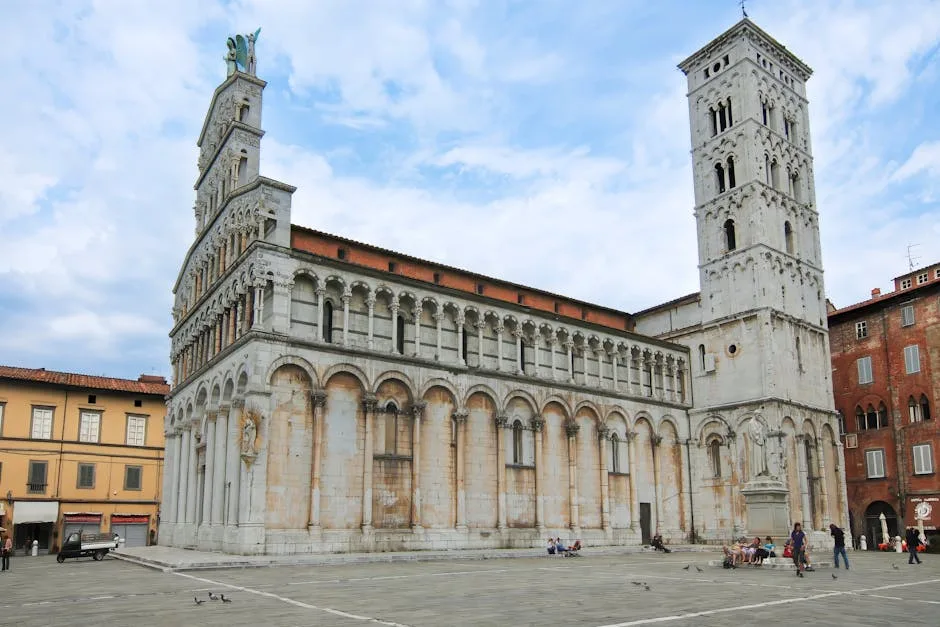
The San Martino Cathedral stands on the site of an early church probably founded in the 4th century, but it’s from the 11th century that the stone building which shaped the cathedral we recognize today began to rise. San Martino’s architecture blends sturdy Romanesque elements with Gothic and Renaissance additions carried out between the 11th and 14th centuries. Its façade, notable for its interplay of arcades and uneven small columns, illustrates the stylistic transition typical of Tuscan towns where continuous building campaigns produced a composite aesthetic.
The bell tower, the crypt and several side chapels reveal interventions from different eras: the crypt sometimes preserves paleochristian remains, while the peripheral chapels were embellished in the 15th and 16th centuries by Lucca’s noble families. The famous Chapel of the Volto Santo was designed to house the Holy Face relic, and its sacred layout shaped the cathedral’s internal arrangement and liturgical route. The main portal, carved and decorated, reflects the work of local workshops that mixed Pisan and Lucchese influences.
A highlight not to miss is the tomb of Ilaria del Carretto, created by Jacopo della Quercia (around 1406), a sculptural masterpiece of Italian funerary art that signals the presence of major artists in Lucca. The successive transformations — repairs, restorations and decorative additions — show a living cathedral shaped by devotion, the prestige of local families and ecclesiastical patronage. This ongoing evolution explains the harmonious patchwork of stylistic elements visible today.
For the modern visitor, understanding these construction phases helps read the different layers: a Romanesque base, Gothic additions in the windows and vaults, and Renaissance interior decorations. 19th-century restoration efforts sometimes aimed to « clean up » or restore a medieval appearance, a common practice in Italy that shaped the image we see now. In short, San Martino is a history book in stone where each chapel, portal and sculpture tells a page of Lucca’s identity.
Major works and interior treasures: the Volto Santo, Ilaria del Carretto’s tomb and more
Inside San Martino Cathedral you’ll find several major works of art that draw visitors and scholars alike. The most famous is the Volto Santo (Holy Face), a cruciform wooden cross bearing the face of Christ, kept in the Chapel of the Volto Santo. Regarded as a miraculous relic, it has been the focus of intense devotion since the Middle Ages and made Lucca a key stop on pilgrimage routes. Access to the relic can be restricted during certain services or security periods; sometimes a specific ticket is required to visit the chapel depending on diocesan arrangements.
Another treasure is the funerary monument of Ilaria del Carretto, sculpted by Jacopo della Quercia (between 1406 and 1408). It’s a finely carved marble sarcophagus depicting the young noblewoman peacefully lying on her funerary bed. The piece is celebrated for its realism and finesse, a forerunner of Renaissance style. Nearby you’ll find numerous paintings, altarpieces and sculptures from local and regional workshops, created between the 13th and 17th centuries. Works by Lucchese and Tuscan artists depict biblical scenes, Madonnas and local saints, reflecting a continuous artistic production.
The Museo del Duomo (or Museo della Cattedrale) adjacent to the cathedral preserves liturgical objects, vestments, illuminated manuscripts and archaeological items related to the diocese’s history. Indicative admission: combined cathedral + museum ticket €3–7 (variable). Visiting the museum helps place the works in their liturgical and technical context: reliquaries, embroidered chasubles, architectural fragments and scale models. Multilingual information panels aid chronological understanding, but for deeper insight a paid guided tour (usually €5–10 extra) is recommended.
Practical tips: respect quiet in areas of devotion, avoid flash photography inside the chapels, and check with the sacristy for possible visiting times to see the Volto Santo. Detail-seekers should also look for small medallions, bas-reliefs and Latin inscriptions scattered through the church — each tells a fragment of Lucca’s religious and civic life.
Opening times, tickets, access and practical tips for visiting
Practical information to plan your visit to San Martino Cathedral:
- Address : Cattedrale di San Martino, Piazza San Martino, 55100 Lucca LU, Italy.
- Opening hours (indicative) :
- Monday – Saturday: 08:30 – 12:30 and 15:00 – 19:00
- Sunday: 10:00 – 12:30 and 15:00 – 18:00
These times may vary during services, religious holidays (Christmas, Easter, Volto Santo celebrations) or special events. Check the Diocese of Lucca’s website or the cathedral’s official page before you go.
- Admission : Entry to the main nave is often free, but access to certain areas (Chapel of the Volto Santo, Museo della Cattedrale) may be ticketed. Indicative prices: museum visit €3–7; guided access or combined ticket €5–10. Special tours can rise to €10–15 depending on the guide and season. Reduced rates for students and seniors; possible free entry for children under 6–12 years (varies).
- Tickets and special visitors : Reservations are recommended for groups and guided tours (phone number and website available via the Lucca tourist office — Tourist Office of Lucca).
- Accessibility : Lucca’s historic center is mostly pedestrian. Ground-floor access to the cathedral is generally possible for people with reduced mobility, but some areas (crypts or bell towers) may be inaccessible. Check in advance for assistance services.
How to get there and where to park:
- From the train station : Lucca’s main station is Piazza Giuseppe Verdi, 55100 Lucca LU — about a 10–15 minute walk to the cathedral or a 5-minute taxi ride (local fare roughly €6–10 depending on the route).
- By car : The historic center is in a ZTL (restricted traffic zone). Recommended car parks: Parcheggio Cittadella (Viale Europa) or Parcheggio San Donato (Viale San Concordio), then reach the walls on foot. Parking rates vary from €1.20–2.00/hour depending on the spot.
- Bus and transfers : Local regular lines serve the city center entrances. The tourist office on Piazza San Michele in Foro provides maps and timetables.
Practical tips to get the most out of your visit:
- Visit early in the morning or late afternoon to benefit from soft light on the façade and avoid the busiest hours between 11:00 and 15:00.
- Take time to enter the sacristy and the Museo della Cattedrale to understand the liturgical context of the works.
- Respect the dress code: cover your shoulders, keep quiet in prayer areas and accept that photography may be restricted in some chapels.
- Combine San Martino with Torre Guinigi (Via Sant’Andrea, 45, 55100 Lucca LU) and the church of San Michele in Foro (Piazza San Michele, 55100 Lucca LU) for a full half-day of culture.
Routes and local experiences around San Martino
Visiting San Martino Cathedral naturally fits into a wider route through the heart of Lucca. Here are some suggested itineraries and local experiences to enrich your stay.
Classic route (2–3 hours): start at Piazza San Martino and the cathedral (approx. 60–90 minutes), then walk 5 minutes to Piazza San Michele to admire San Michele in Foro’s ornate façade. From there head to Via Fillungo, the historic shopping street, for a coffee break at Caffè Di Simo (Via Fillungo 151, 55100 Lucca LU). Afterward, climb Torre Guinigi (Via Sant’Andrea, 45) for panoramic views of the roofs and Tuscan hills (tower access fee ~€5–8). This loop mixes art, views and everyday local life.
Sunrise ride: morning light gives the cathedral’s stones a golden hue. After your visit, rent a bike to ride Lucca’s city walls (Passeggiata delle Mura di Lucca, access from Viale Elisa) — a flat 4 km route popular with families and cyclists. Indicative bike rental: €4–8/hour depending on the provider.
Deep cultural experience: book a themed guided tour on the Volto Santo and Lucca’s role in medieval pilgrimages (90–120 minutes). Many local guides affiliated with the Associazione Guide Turistiche di Lucca offer tours in English, Italian and other languages (group fee €80–120; individual €10–20 depending on duration).
Food tips nearby: after your visit, try Lucca specialties like zuppa di farro (spelt soup), tordelli lucchesi (stuffed pasta) or a local pastry at Pasticceria Venezia (Via Fillungo, 168). For a full meal, recommended nearby restaurants include Trattoria Da Leo (Piazza San Michele, 55100 Lucca LU) or Ristorante Giglio (Piazza San Michele 1), with main dishes ranging from €10 to €25.
In the evening Piazza San Martino comes alive and is a pleasant spot for an aperitivo. Take advantage of the proximity to several monuments to capture night photos of the illuminated cathedral — the façade takes on dramatic tones after sunset, ideal for architectural photography enthusiasts.
Conclusion
San Martino Cathedral in Lucca is far more than a religious monument: it’s a concentration of history, art and civic memory. From paleochristian origins to medieval and Renaissance reworkings, every stone and artwork testifies to centuries of spiritual and artistic commitment. The Volto Santo, Ilaria del Carretto’s tomb and the Museo della Cattedrale’s collections offer multiple layers of interpretation for visitors — from pilgrims to art historians to curious travelers.
Practically speaking, the cathedral is easy to reach from Lucca’s train station and sits within a pedestrian-friendly historic center full of walking opportunities. Hours and prices are generally reasonable — free access to the nave and small fees for the museum and reliquary chapel — but it’s always best to check current information with the Lucca tourist office or official sites before you go. Also remember to respect the sacred setting by dressing appropriately and keeping quiet in areas of devotion.
To make the most of San Martino: plan your visit for early morning or late afternoon for the light and atmosphere, combine it with nearby monuments (Torre Guinigi, San Michele in Foro) and leave time to wander the lanes and savor the local cuisine. Lucca rewards those who pay attention to details; San Martino Cathedral is its beating heart, where past and present meet to offer a deep and memorable cultural experience.