




Introduction — Let the City Lead You Through Lucca’s Medieval Core
Lucca, the often-overlooked Tuscan gem tucked behind Florence and Pisa, still wears its medieval heart with remarkable integrity: intact narrow streets, shady piazzas, towers piercing the skyline, and ramparts turned into promenades. An audio walking tour through Lucca’s medieval center is one of the most immersive ways to experience the city: it mixes heritage, local anecdotes, tasty pit-stops and practical pointers while letting you move at your own pace. The audio guide acts like a well-informed friend, freeing your eyes to wander, your hands to touch the stones, your ears to pick up the bells — and helping you spot the little details (facades, plaques, old shop signs) that a casual glance might miss.
This format works especially well in Lucca because the historic center is compact: in just a few kilometers on foot you cross overlapping eras, from the Roman forum reshaped into Piazza dell’Anfiteatro to the cloisters of the Duomo di San Martino. The audio guide gives you focused historical background for specific sites — the Cathedral of San Martino (Duomo di Lucca), Torre Guinigi, Torre delle Ore, Piazza San Michele, the Mura urbane — and practical info: where to buy tickets, opening hours, exact addresses, euro prices, recommended stops for coffee or gelato, public restrooms and accessibility for strollers or mobility-impaired visitors.
Whether you have half a day or a full day, a structured audio route lets you build your own visit: follow the suggested path exactly or tweak it to linger where you like. This article lays out a detailed version of a pedestrian audio route through the medieval core, with concrete waypoints (full monument names, exact addresses, prices, hours) and local tips to make the walk smooth and memorable. Descriptions aim to be sensory: textures (worn cobbles, ivy-draped walls), sounds (bell chimes, conversations under arcades) and scents (freshly ground coffee, warm bread) are evoked so you can almost smell the city before you set foot in it.
Before you set off, download the audio route to your smartphone, bring comfortable earphones, a small bottle of water and shoes suited to cobbles. The best times to start are early morning, between 8:30 and 10:30, to enjoy soft light and a quiet city, or late afternoon for golden tones and cooler temperatures in summer. This guide also points out paid public restrooms, nearby parking and bike rental spots if you want to extend the walk with a loop atop the walls.
Section 1 — Start: Piazza San Martino and Duomo di San Martino (Lucca Cathedral)
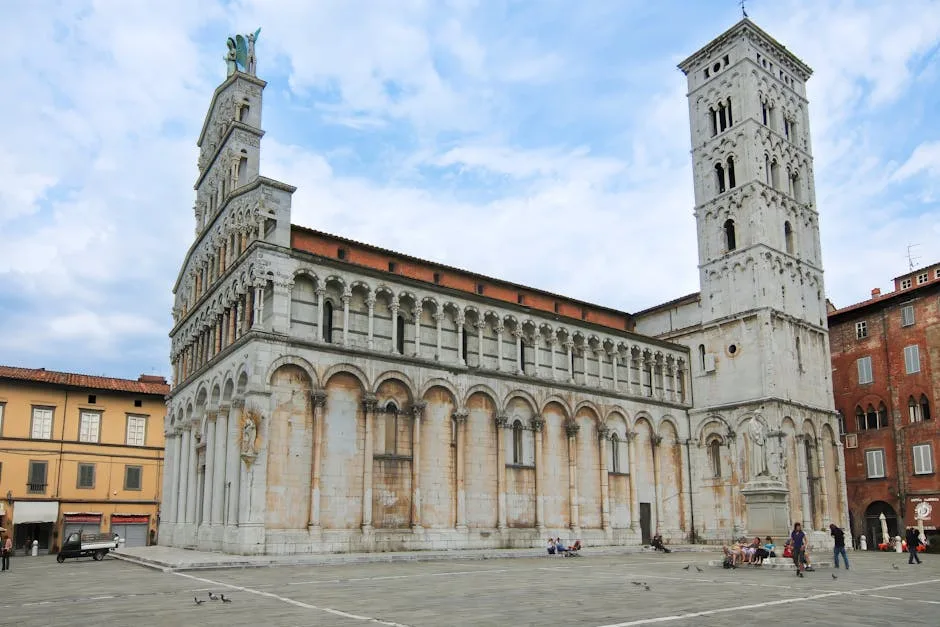
Begin your audio tour at the Cathedral of San Martino (Duomo di Lucca), located at Piazza San Martino, 55100 Lucca LU, Italy. This Romanesque-Gothic cathedral, built between the 11th and 14th centuries, is famous for the Volto Santo reliquary and its artistic masterpiece, the « Tavola di San Martino. » The audio will explain the story of the Volto Santo and point out architectural changes visible in the carved façade and campanile.
Opening hours: generally open Tuesday to Sunday from 9:00 to 12:30 and 15:00 to 19:00 (may close for services outside these times). Entry to the cathedral: free to access the nave; visit to the Museo del Duomo (Duomo Museum): around €6.00 – €8.00 depending on temporary exhibitions. Buy tickets at the Museo del Duomo ticket office or via the official site to skip lines in high season.
Immersive description: as you approach the square you feel the warm stone underfoot and hear the mingled steps of tourists and worshippers. Interior columns still show traces of old polychromy; the choir, bathed in light, reveals textures of wood and ivory. The audio guide tells the tale of the Volto Santo — a crucifix that, legend says, was carved by Nicodemus and lowered from the sky — and even suggests the best angle for a reflection-free photo of the façade.
Practical tips: bring a light jacket for entering religious sites, avoid flash photography in the choir, and allow 30–45 minutes for a full visit including the museum. Restrooms: paid public toilets are available near Piazza San Martino. Nearby cafe suggestion: Bar Pasticceria Di Lazzaro, Via Fillungo, 181, 55100 Lucca, open 7:30–19:00; espresso ≈ €1.20.
Section 2 — Torre Guinigi, Torre delle Ore and Tower Views
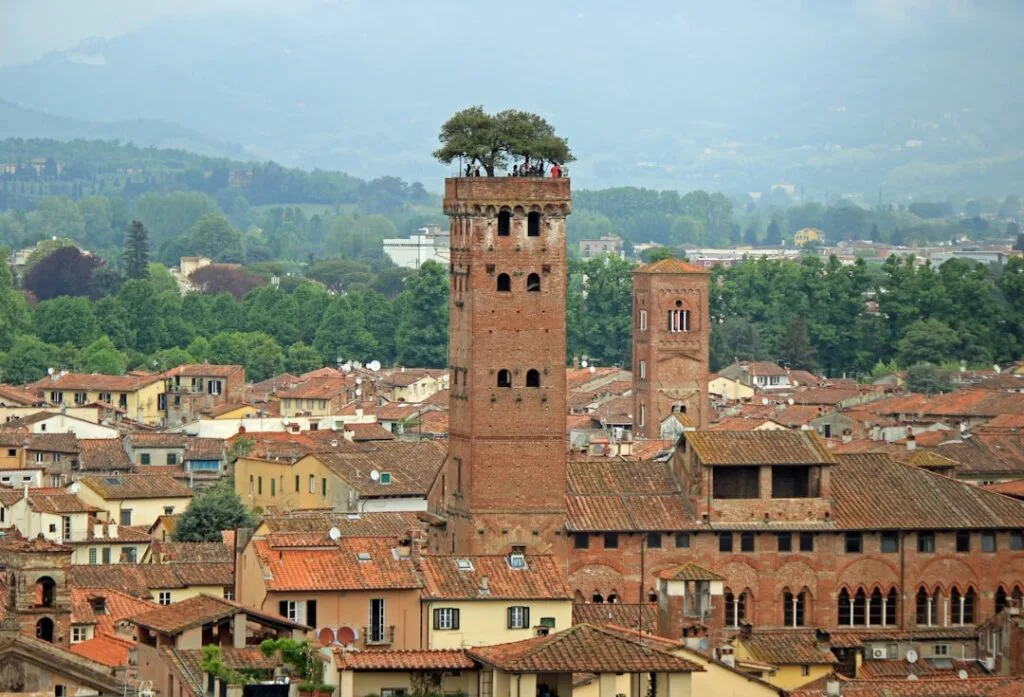
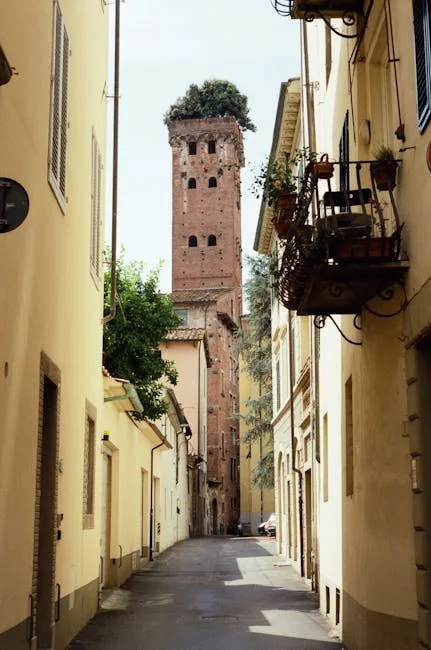
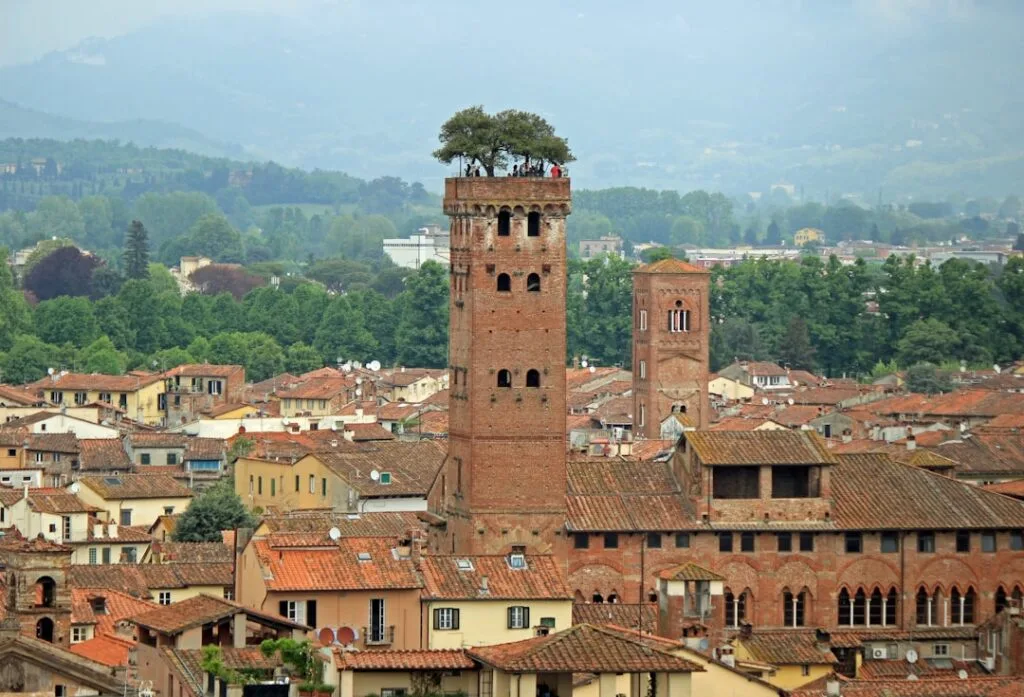
After the cathedral, head to two emblematic towers: Torre Guinigi (Via Sant’Andrea, 37, 55100 Lucca LU) and Torre delle Ore (Piazza San Michele, corner of Via delle Ore, 55100 Lucca LU). These towers offer different panoramas and tell the story of rival influential families in the Middle Ages. The audio guide covers their construction, successive owners and the symbolism of the rooftop garden on Torre Guinigi.
Hours and prices: Torre Guinigi typically opens from 9:00 to 19:00 in high season, entry ≈ €9.00. Torre delle Ore is usually open 9:30 to 18:30, entry ≈ €7.00. Hours may vary by season and holidays — check before you go. The audio will flag busy periods and recommend booking online for summer weekends.
Immersive description: the climb up Torre Guinigi ends on a planted terrace where mighty oak trees appear to float above the rooftops. From here your view sweeps across red-tiled roofs, bell towers and distant ridgelines. At Torre delle Ore, the audio explains the clock mechanism — the gears, weights and face — bringing to life a city once paced by mechanical time. The guide also tells you the best photo moments: just after sunrise for soft light or at sunset for a golden glow.
Practical tips: climb early to avoid heat and queues; wear shoes with good grip (narrow spiral staircases) and avoid bringing strollers (not accessible). Allow 30–45 minutes per tower. Nearby stop: Pasticceria Taddeucci (Via Fillungo, 163, 55100 Lucca) for a focaccia al formaggio (≈ €3.50).
Section 3 — Piazza dell’Anfiteatro, Via Fillungo and Medieval Shopping Streets
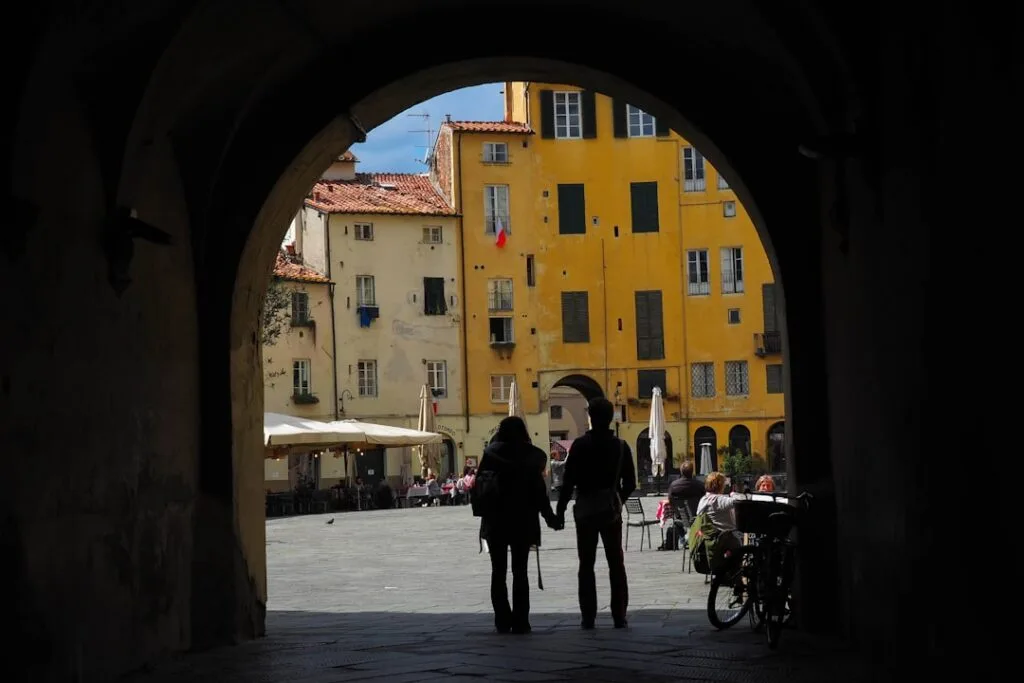
Continue the audio route down to the Piazza dell’Anfiteatro (Piazza Anfiteatro, 55100 Lucca LU), an elliptical square born from the remains of a Roman amphitheater. The audio explains the urban transformation: how homes and shops filled the ancient tiers to create the charming oval you see today. The stalls, cafés and small shops along Via Fillungo still carry a medieval imprint, and the audio recommends spots for local crafts and gourmet products.
Addresses and opening times: shops on Via Fillungo generally open from 9:00 to 19:30 (times vary; some close Sundays). For lunch in Piazza dell’Anfiteatro: recommended restaurants include — Trattoria da Gigi, Piazza Anfiteatro, 3, 55100 Lucca, open 12:00–15:00 and 19:00–23:00; typical dish prices ≈ €12–€18. For a sweet break, local gelaterias offer a scoop ≈ €2.50.
Immersive description: stroll under the arcades where shade alternates with patches of sunlight; listen to the audio whisper the histories of merchants, medieval markets and artisan workshops, plus the legend of the « forbidden fountain. » The route trains your eye on architectural details: carved lintels, stone window surrounds and old shop signs. Via Fillungo is ideal for finding wooden crafts, antique shops and bookstores specializing in local history.
Practical tips: pay by cash or card depending on the shop (many accept cards). If buying bulky souvenirs, ask for travel packing or shipping options. Restrooms and Wi‑Fi: several cafés allow restroom access to customers (minimum purchase ≈ €1.50–€2.00), and some public Wi‑Fi hotspots are available around Piazza San Michele. The audio will suggest a tasting break depending on the time of day.
Section 4 — The Mura di Lucca: Walk the Ramparts and Gardens
Finish the audio route with a walk along the Mura di Lucca, the city walls converted into a tree-lined promenade. The main entrance is near Porta San Pietro (Viale Sant’Paolo area, 55100 Lucca LU). The walls form a continuous 4 km walkway fringed with centuries-old trees, benches and picnic spots. The audio covers the walls’ military history (16th century) and explains how they were transformed into public green space in the 19th century.
Opening: the promenade is free and accessible 24/7. Best times: sunrise (calm, ideal for jogging) or late afternoon (soft light, families). Rarely closed; beware of special events or markets. Main access points: Porta San Pietro, Porta San Donato, Porta San Paolino. The audio also points out bike rental locations, for example Lucca Bici, Viale Giovanni Capponi, 55100 Lucca, rentals ≈ €8–€12 / half-day.
Immersive description: walking the walls you feel the wind above the roofs, see the squares from an elevated angle and discover hidden gardens at the base of the ramparts. The audio suggests a 1h30–2h loop with stops at viewpoints to photograph towers and the Duomo dome. You’ll hear local stories: balls held on the walls, aristocratic promenades and Resistance-era anecdotes from World War II.
Practical tips: bring water, wear a sun hat in summer and pack a light jacket for evening. The surface is generally paved and flat — suitable for sturdy strollers and city bikes. In rain, some stretches can be slippery — take care. For a final pause, visit the Giardino degli Orti Botanici (Orto Botanico Comunale, Piazza del Giardino Botanico, 55100 Lucca), open 9:00–18:00, entry ≈ €3.00.
Conclusion — Why an Audio Walking Tour Is the Best Way to See Lucca
An audio walking tour of Lucca’s medieval heart turns a simple stroll into a richly informed, sensory immersion. The guide combines history, architectural context, human stories and practical pointers: exact addresses (Piazza San Martino, Via Sant’Andrea 37, Piazza Anfiteatro), opening times (Duomo, towers, museums), euro prices (Duomo museum ≈ €6–€8, Torre Guinigi ≈ €9, Torre delle Ore ≈ €7) and local tips (best times to visit, stroller access, coffee stops, bike rentals). This format keeps your hands free for photos, touching the stone and sharing moments while the audio maintains the narrative thread.
On a practical level, audio gives total flexibility: speed up, slow down, replay a section or skip a stop if the weather turns. For families it livens the visit with stories and audio cues; for architecture buffs it decodes styles and periods; for food lovers it pinpoints where to try the best focaccia or coffee. Above all, the route respects the city’s pace: Lucca is meant to be savored, not rushed. Follow this path and you’ll leave with a full picture of the medieval core — its stones, its people, its vistas — and concrete options to keep exploring at your leisure.
Before you go: download your audio guide, check seasonal monument hours, book Torre Guinigi or museum tickets online if needed, carry some cash for small purchases and allow about half a day for the standard route (or a full day if you plan multiple museum visits). Lucca lends itself to slow travel: let the guide lead you, but most of all, let the city surprise you.