





Introduction
Lucca (Lucca in Italian) is one of Tuscany’s best-preserved gems and a joy to explore on foot. Ringed by its famous tree-lined walls, the medieval town hides a rich religious heritage that spans eight centuries of history, art, and spirituality. Lucca’s churches are more than places of worship: they’re living museums filled with frescoes, polychrome marbles, striking Romanesque façades, soaring bell towers and chapels that shelter masterpieces by local and international artists.
In this full guide I lay out a detailed route to the 10 must-see churches in Lucca: exact addresses, typical opening hours, usual admission fees, immersive descriptions and practical tips to make the most of each visit. Whether you love Romanesque and Gothic architecture, are fascinated by local saints, are a photographer chasing the best light, or a curious traveler looking to avoid the crowds, you’ll find concrete info and local advice here.
The selection covers the major monuments — from the Duomo di San Martino to the Basilica di San Frediano — as well as quieter but essential churches for understanding Lucca’s soul, like the Chiesa di San Paolino and Chiesa di San Pietro Somaldi. For each site you’ll find exact addresses so you can plan your itinerary in any order, plus practical pointers: best time to visit, photo spots, access by public transport or bike, and what not to miss inside (altarpieces, tombs, organs, mosaics).
Finally, because a successful visit also depends on practical details, I finish this article with tips on combined tickets, availability of audio guides or guided tours in English or French, etiquette (dress code, photography) and suggestions to extend your stay after your religious discovery: nearby cafés, a stroll on the walls, and sunset walks through the city. Ready to dive into sacred Lucca? Follow the guide.
 Click here to discover Lucca with a qualified guide
Cathédrale de San Martino (Cattedrale di San Martino)
Full name: Duomo di San Martino — Cattedrale di San Martino
Address: Piazza San Martino, 55100 Lucca LU, Italy
Typical opening hours: Monday–Sunday 8:30 – 12:30 and 15:00 – 19:00 (times vary around services); may close between noon and 15:00 on Wednesdays
Admission: cathedral entry is free; access to the Museo Capitolare, bell tower climb or certain chapels may be charged (€3.00 – €6.00 depending on access); combined tickets vary
The Cathedral of San Martino is Lucca’s spiritual and artistic heart. Its medieval façade, alternating white marble and carved decoration, sets the stage for what awaits inside: richly decorated chapels, Renaissance altarpieces and the famous Volto Santo (the Holy Shroud or miraculous crucifix), venerated since the Middle Ages. Inside, Romanesque austerity mixes with Baroque lighting: columns, arches and the arrangement of chapels create a contemplative route that often ends at the main altar.
Don’t miss: the Chapel della Sacra Cintola (where the relic is traditionally kept), the tomb of Ilaria del Carretto sculpted by Jacopo della Quercia, and the stained glass that streaks the nave at certain afternoon hours. For photographers, the soft morning light on the façade and a quiet piazza make for the best shots. Services may restrict access to some areas — check with the tourist info point on site.
Practical tips: arrive early to beat the crowds and to avoid disrupting services (appropriate dress required). If you plan to climb the bell tower or visit the Museo Capitolare, bring a few euros by card or cash (some small chapels accept cash only). Audio guides are sometimes available, and guided tours in English or Italian can be arranged through the tourist office in Piazza San Martino.
Click here to visit San Martino and San Frediano with a guide

Basilica di San Frediano and Piazza San Frediano
Full name: Basilica di San Frediano
Address: Piazza San Frediano, 55100 Lucca LU, Italy
Typical opening hours: daily 9:00 – 12:00 and 15:00 – 18:00; summer hours sometimes extended until 19:00
Admission: usually free to enter; access to certain areas (crypts, temporary exhibitions) €2.00 – €5.00
The Basilica di San Frediano first captivates with its stunning Byzantine-style mosaic on the façade depicting the Ascension of Christ. This golden mosaic, visible from the piazza, is one of Lucca’s most photographed sights. Inside the church the mood is more restrained but steeped in history: Romanesque columns, a decorated apse and an ancient crypt that sometimes hosts archaeological displays and relics.
Stroll around Piazza San Frediano — a true local hub where cafés, terraces and markets bring the square to life. The basilica is especially lively during major religious celebrations and local processions. For a picturesque scene, head to the street that leads to the basilica early in the morning when café chairs are being set out.
Practical tips: check whether the crypt is open the day you visit (it can be closed for events). History buffs should look for the carved capitals and Latin inscriptions on some of the columns. In summer, late afternoon is a great time to visit when the piazza wakes up after the siesta — and stop at a nearby café for a caffè corretto or artisanal gelato.
Click here to discover Lucca’s highlights on foot
San Michele in Foro and Piazza San Michele
Full name: Chiesa di San Michele in Foro
Address: Piazza San Michele, 55100 Lucca LU, Italy
Typical opening hours: 9:00 – 12:30 and 15:00 – 18:00; some mornings close for services, check locally
Admission: main access is free; guided visits and access to certain temporary exhibitions €1.50 – €4.00
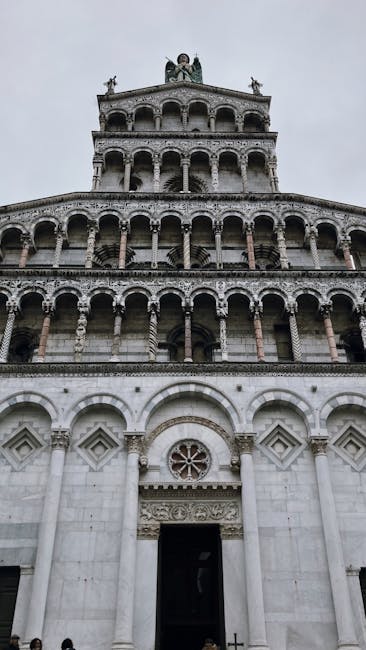
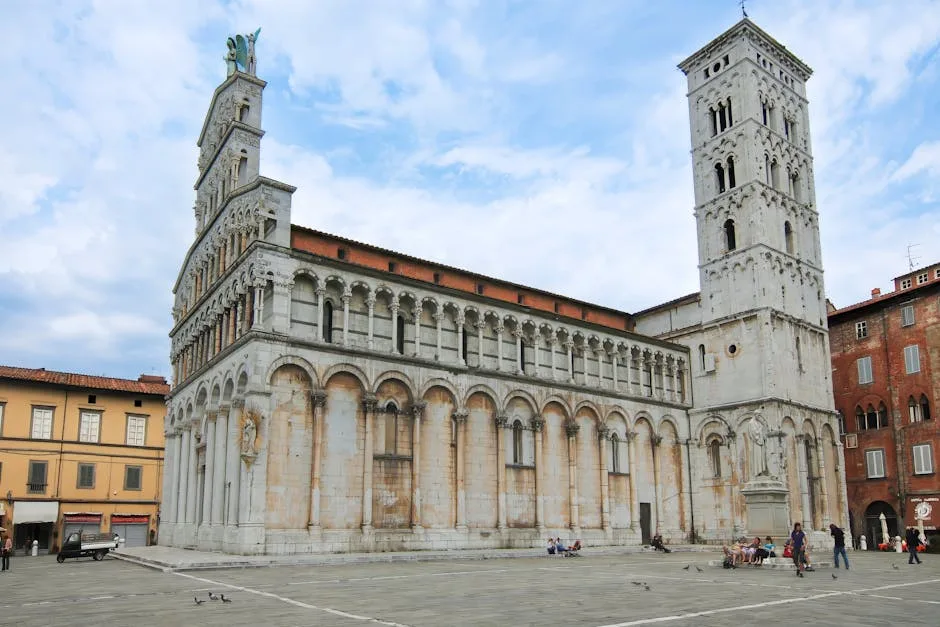
San Michele in Foro is arguably Lucca’s most photogenic church thanks to its exuberant, sculpted façade that fills almost the entire square. Built over the old Roman forum (hence « in Foro »), the façade is a vivid example of the lavish stone carving by Tuscan masters. The statue of Saint Michael vanquishing the demon at the top is iconic.
Inside, the church is calmer than the façade suggests: several side chapels hold frescoes and interesting works of art, and the central nave exudes architectural elegance. If you happen to be there during a mass, don’t miss the acoustics — San Michele is famed for the way it carries song.
Practical tips: the piazza gets busy during the day; the best times for photos with fewer people are early morning or just after sunset. Watch out for souvenir shops on the square that may overcharge — look for more authentic buys in the side streets. If visiting with a group, follow staff instructions regarding photography during services.
Click here to join a guided walking tour of Lucca
Chiesa di San Francesco, Chiesa di Sant’Agostino and the Franciscan churches
Chiesa di San Francesco
Address: Piazza San Francesco, 55100 Lucca LU, Italy
Typical opening hours: 9:00 – 12:30 and 15:00 – 18:00 (hours vary with parish activities)
Admission: free to visit; occasional temporary exhibitions may charge €2.00 – €5.00
Chiesa di San Francesco is a large, fairly austere building that reflects the Franciscan presence in the area. Inside you’ll find frescoes, side altars and sometimes parish-run exhibitions. The church also hosts chamber concerts, taking advantage of the nave’s wonderful acoustics.
Chiesa di Sant’Agostino
Address: Piazza Sant’Agostino, 55100 Lucca LU, Italy
Typical opening hours: 9:30 – 12:30 and 16:00 – 19:00; closed some weekdays
Admission: free to enter; exhibitions and concerts sometimes cost €3.00 – €8.00
Sant’Agostino charms with its cloister and the intimate atmosphere of its chapels. Architecturally it blends medieval elements with Renaissance updates. The cloister is a true haven — trees, a fountain and shade make it a great spot for a pause between visits.
Practical tips for both churches: check concert schedules — Lucca has a lively music scene and the Franciscan churches often host early-music recitals or local choirs. In low season, confirm opening hours on local websites or with the tourist office, since parish events can change public access times.
Click here to attend a Puccini Festival concert

Chiesa di Sant’Agostino
Address: Piazza Sant’Agostino, 55100 Lucca LU, Italy
Typical opening hours: 9:30 – 12:30 and 16:00 – 19:00; closed some weekdays
Admission: free to enter; exhibitions and concerts sometimes cost €3.00 – €8.00
Sant’Agostino charms with its cloister and the intimate atmosphere of its chapels. Architecturally it blends medieval elements with Renaissance updates. The cloister is a true haven — trees, a fountain and shade make it a great spot for a pause between visits.
Practical tips for both churches: check concert schedules — Lucca has a lively music scene and the Franciscan churches often host early-music recitals or local choirs. In low season, confirm opening hours on local websites or with the tourist office, since parish events can change public access times.
San Paolino, San Pietro Somaldi and small neighborhood churches to discover
Chiesa di San Paolino
Full name: Chiesa di San Paolino
Address: Via San Paolino, 55100 Lucca LU, Italy (near Piazza San Michele)
Typical opening hours: 10:00 – 12:30 and 16:00 – 18:30; hours may vary
Admission: free (donations welcome); access to some chapels or exhibitions €1.00 – €3.00
Chiesa di San Paolino, while smaller than the cathedral, is an intimate artistic treasure. Visitors will notice baroque altarpieces and decorations and a strong local devotion to the patron saint, with liturgical feasts marking the year. The surrounding neighborhood has charming lanes and artisan workshops.
Chiesa di San Pietro Somaldi
Full name: Chiesa di San Pietro Somaldi
Address: Via San Pietro Somaldi, 55100 Lucca LU, Italy
Typical opening hours: 9:00 – 12:30 and 15:00 – 18:00; sometimes closed for parish activities
Admission: usually free; some local guided visits may charge (€2.00 – €5.00)
San Pietro Somaldi is typical of Lucca’s neighborhood churches where simple architecture often hides pleasant surprises: restored frescoes, marble altars, and engraved plaques that tell local stories. These small churches let you feel daily life in Lucca and escape the tourist flows focused on major squares.
Practical tips: combine visits to these small churches with a break at cafés on the nearby little squares. These neighborhoods keep an authentic atmosphere — follow your nose to local bakeries and small trattorias offering Luccan specialties. Also, ask sacristans if they can show you particular features (organs, crypts) — often they’ll open them on request.
Click here to discover Lucca on a private walking tour
Less-known but essential churches: Oratorio di San Giuseppe, Chiesa dei Santi Giovanni e Reparata, Santa Maria Forisportam
Oratorio di San Giuseppe
Address: Via Vasco Pratolini 1 (near the center), 55100 Lucca LU, Italy
Typical opening hours: 10:00 – 12:00 and 16:00 – 18:00 (days vary with events)
Admission: free or suggested donation; sometimes tickets for concerts (€3.00 – €7.00)
The Oratorio di San Giuseppe is a small chapel often used for cultural events, exhibitions and concerts. Its intimate scale makes it a perfect spot to listen to sacred music and to appreciate decorative details that can be hard to notice in large basilicas.
Click here to experience artistic and musical events in Lucca

Chiesa dei Santi Giovanni e Reparata (often called San Giovanni) — note that there are churches with similar names in the region; this one is a neighborhood church close to the Duomo.
Address: Via San Giovanni, 55100 Lucca LU, Italy (confirm exact location on site)
Typical opening hours: variable; often open in the morning and late afternoon
Admission: usually free
This church nicely illustrates Lucca’s religious mosaic: modest-sized buildings rich in history. Locals continue ancient devotions here, and it’s not uncommon to find ex-votos or plaques that reveal centuries of local tradition.
Santa Maria Forisportam
Address: Via di Santa Maria Forisportam, 55100 Lucca LU, Italy (a street near the ancient walls)
Typical opening hours: 9:00 – 12:30; 15:00 – 18:00 (days vary)
Admission: free; temporary exhibitions may charge depending on programming
Santa Maria Forisportam, as its name suggests (« outside the gate »), once served people arriving from beyond the walls. Its architecture is interesting and its proximity to the ramparts makes it a natural stop if you pair your religious circuit with a walk along the city walls.
Practical tips for these small churches: some have very irregular hours and are mainly open for services or events. Before you go, check the Lucca tourist office or call the parish if possible. These places are ideal for quiet moments of prayer or reflection and for chatting with locals.
Practical tips for visiting Lucca’s churches
– Dress & respect: Although Lucca is touristy, churches remain active places of worship. Shoulders and knees should be covered. Keep voices low during services and respect areas reserved for worshippers.
– Photography: most exteriors can be photographed freely. Inside, many churches allow non-flash photography; some restrict or ban photography to protect artworks. Always ask staff before using a tripod or additional lighting.
– Tickets & combinations: some churches and ecclesiastical museums offer combined tickets (Duomo + Museo Capitolare, etc.). These combos are often cheaper if you plan to visit several paid sites. Inquire at the tourist office in Piazza San Martino.
– Best times to visit: early morning (8:30–10:30) for photos without crowds and soft light; late afternoon for interiors filled with slanted light that brings out texture and relief. Avoid service times if you don’t want to disturb (generally 11:00–12:30 and 18:00–19:30 depending on parish).
– Getting around: Lucca is very walkable and bike-friendly. The ramparts offer cycle paths and entrances close to major monuments. Park outside the walls (e.g. Parcheggio Stazione or Park San Francesco, subject to availability) if you arrive by car.
– Money & payments: most major sites accept cards, but some small chapels and oratories prefer cash for donations or small entry fees. Bring a few coins.
– Guides & audio guides: if you want to dig deeper, guided tours in French can be booked via the tourist office or private operators. Audio guides are offered for some Duomo and Museo Capitolare visits.
Click here to book a walking tour of Lucca’s historic centre
Conclusion
Lucca is a place where faith, art and everyday life meet in a compact, vibrantly lived-in space. The ten churches covered in this article — from the Duomo di San Martino to the Basilica di San Frediano, and including San Michele in Foro, San Francesco, Sant’Agostino, San Paolino, San Pietro Somaldi, Oratorio di San Giuseppe, San Giovanni (Santi Giovanni e Reparata) and Santa Maria Forisportam — offer a full spectrum of experiences: grand and intimate, silent and musical, historic and living.
Each church has its own personality: some impress with a sculpted façade while others hide interior treasures, tombs and relics that tell the city’s long story. By planning your visits according to the hours listed (and checking for seasonal changes or local events), you’ll make the most of your discoveries and truly feel Lucca’s special atmosphere.
To get the most from your stay, pair church visits with a walk on the walls, a lunch in a trattoria to taste a Tuscan specialty, and a coffee break on one of the small squares. Lucca’s churches are not just monuments: they are social and cultural landmarks where locals meet, celebrate and preserve their heritage. With a respectful attitude and some time to observe, you’ll leave with striking images — golden mosaics, carved façades, naves soaked in light — and a deeper sense of the Tuscan spirit.
Don’t forget to check parish websites or the Lucca tourist office before you travel to confirm hours and fees, especially during religious holidays or cultural festivals. And above all: give yourself time. In Lucca, beauty is revealed slowly — by walking, opening a door and listening to a song rising in a gilded nave.
Click here to book a private day trip to Pisa and Lucca