





Introduction: How a medieval church trail transforms your visit to Lucca
Lucca, a small Tuscan town with its charm beautifully intact, feels like a time capsule where medieval life reveals itself around every corner. Built around a Roman enclosure and reshaped in the Middle Ages, Lucca still boasts an unusually high concentration of churches, basilicas and chapels that tell the city’s religious, artistic and civic story. Following a medieval church trail is more than an architectural route — it’s a stroll that uncovers carved façades, Byzantine mosaics, Romanesque frescoes, quiet cloisters and forgotten masterpieces. This walk helps you see how faith, municipal power and patrician families shaped the urban fabric.
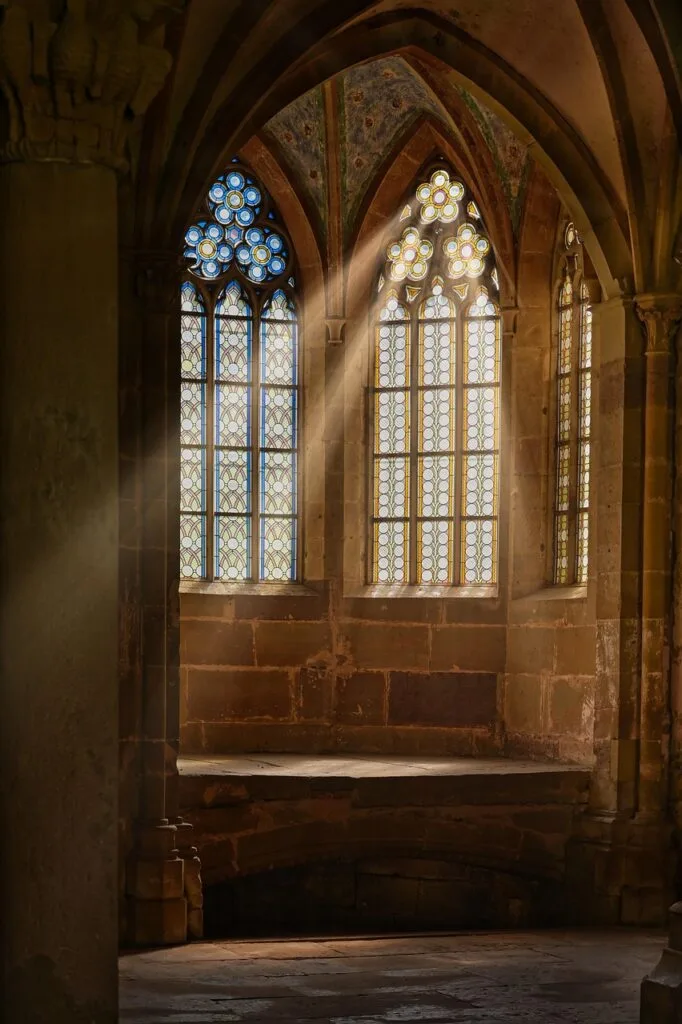
Wandering the lanes between Piazza San Michele, Piazza San Martino and Piazza San Frediano you’ll sense the layers of time. These sites aren’t dead monuments: they’re active places of worship, modest museums at times, and often excellent vantage points on everyday Lucchese life — markets, services, sacred music concerts and processions. For travelers who love history, art or photography, each church provides a stage for sensory experiences: the morning mass echoing under Romanesque vaults, the muted glow of a Gothic stained glass window, or the polished stone of a Baroque altar contrasting with a stern Romanesque façade.
This guide was put together to give you a clear route, practical info and immersive descriptions so you can make the most of your visit. You’ll find full addresses of the main buildings, typical opening hours, entry prices (when applicable), and local tips — how to avoid the busiest times, where to hear a sung service, or which café to choose for a break between visits. I also include walking-optimization tips, photography suggestions and etiquette for places of worship. For every stop I point out must-see treasures: artworks, funerary chapels, crypts and city viewpoints.
Whether you have a day or several days in Lucca, following a medieval church trail turns your visit into a coherent, emotional experience: you’ll stop seeing the city as a row of façades and start perceiving it as a tapestry of stories, devotions and art. This guide walks you through it step by step, prioritizing accuracy and immersion. Lace up comfortable shoes, bring a notebook and your curiosity — medieval Lucca is ready to reveal itself.
Overview map and recommended walking route to discover Lucca on foot
Start your route in the historical center to best enjoy the dense cluster of medieval churches. A classic, efficient loop (walkable in 2 to 4 hours depending on stops) begins at Piazza San Michele, continues to the Cattedrale di San Martino (Piazza San Martino), then heads down to the Basilica di San Frediano (Piazza San Frediano) and goes on to San Francesco (Piazza San Francesco) with a few hidden chapels tossed in. This loop is easily reachable from Lucca station (Stazione di Lucca): expect a 15–20 minute walk.
Recommended walking itinerary — approximate duration: 2.5 to 4 hours
- Stop 1: Chiesa di San Michele in Foro — Piazza San Michele, 55100 Lucca
- Stop 2: Cattedrale di San Martino (Duomo di Lucca) — Piazza San Martino, 55100 Lucca
- Stop 3: Basilica di San Frediano — Piazza San Frediano, 55100 Lucca
- Stop 4: Basilica di San Francesco — Piazza San Francesco, 55100 Lucca
- Stop 5: Small chapels and cloisters (Oratorio di San Giuseppe, Chiesa di San Giovanni)
Practical tips for the route:
- Start early in the morning (9:00–10:00) to avoid summer heat and tourist groups. Morning light is perfect for photographing sculpted façades.
- Wear sturdy, comfortable shoes: cobbled streets and small steps inside churches demand care.
- Observe silence and dress codes (shoulders and knees covered in some churches during services). If a mass is in progress, enter quietly or come back afterwards to tour.
- Bring cash for donations: many churches welcome a small anonymous contribution on entry or exit.
Transport and logistics info:
- Train station: Stazione di Lucca — Piazza Ricasoli, 55100 Lucca LU. From the station it’s a 15–20 minute walk to Piazza San Michele.
- Parking: Parcheggio Cittadella (Viale Regina Margherita 10) or Park Centro Storico (Via del Fosso). Vehicles are often prohibited in the historic center; it’s better to park outside and enter on foot through one of the city gates.
- Public toilets: Piazza San Michele and Piazza San Martino (tourist toilets and nearby bars).
 Click here to book a walking tour of the highlights
Cattedrale di San Martino (Lucca Cathedral): history, highlights and practical info
The Cattedrale di San Martino is one of Lucca’s major religious jewels. Address: Piazza San Martino, 55100 Lucca LU, Italy. Built on the site of an earlier Christian shrine, its façade mixes Romanesque and Gothic elements and the interior holds major works, including the Volto Santo, the famous medieval carved cruciform image venerated by pilgrims, along with paintings and noble family tombs. The Duomo also houses richly decorated chapels, a diocesan museum and a cloister that invite contemplation.
Hours and fees (indicative — check locally as schedules change with seasons and services):
- Opening hours to the public: typically 10:00–18:00 in low season, sometimes 09:30–19:00 in high season. Temporarily closed during major religious services; limited opening on Sunday mornings because of masses.
- Entrance fee: Duomo + Cathedral Museum visit: around €4–6 per adult. Reduced rates for students and groups; the cathedral alone is often free or relies on voluntary donations during services.
Must-see highlights:
- The Volto Santo (Holy Face): a medieval wooden cruciform statue displayed under a silver baldachin. A masterpiece of devotion and a long-standing pilgrimage focus.
- The tomb of Ilaria del Carretto (sculpted by Jacopo della Quercia), an outstanding Gothic funerary sculpture.
- The Cathedral Museum: houses liturgical textiles, goldsmith works and painted panels that complete the local sacred art story.
Visiting tips:
- Allow at least 45–60 minutes for a full visit (interior, museum, cloister). If you plan to attend a mass then tour afterwards, add extra time.
- Photography: non-flash photos are generally permitted; still ask before photographing very sacred areas.
- Audio guide: sometimes available in the museum for about €3–5. Alternatively, pick up a paper guide at reception for context on the works.
Click here to discover San Martino and San Frediano with a guide
Basilica di San Frediano and Chiesa di San Michele in Foro: sculpted façades and mosaics
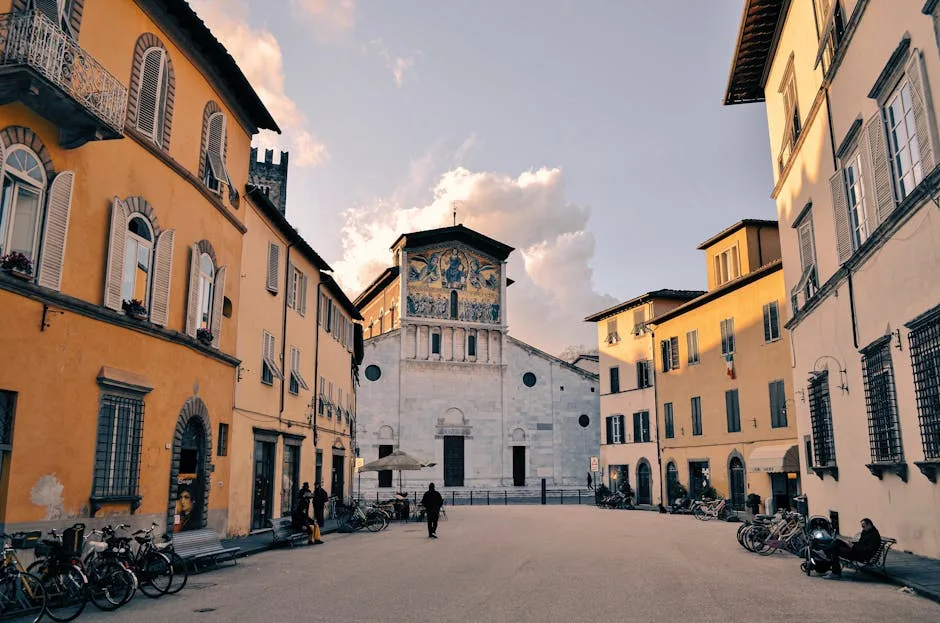
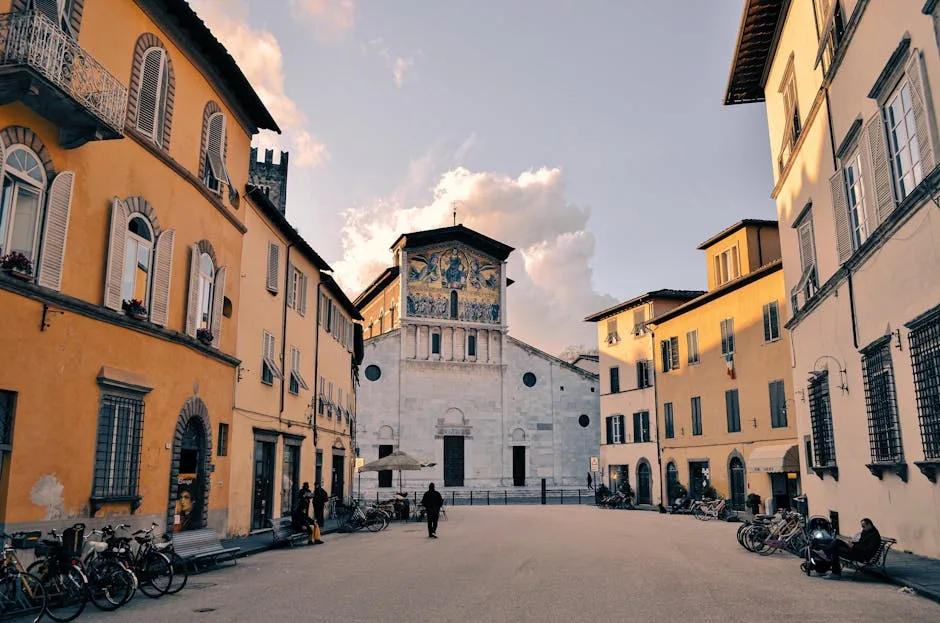
The Basilica di San Frediano is another must-see. Address: Piazza San Frediano, 55100 Lucca LU, Italy. Its Romanesque façade, dominated by a large Byzantine mosaic depicting the Ascension of Christ, is spectacular — especially in low morning light or at sunset. The church retains a strong community vibe: it often hosts concerts and local services. The interior surprises with Romanesque simplicity, side chapels and frescoes that reveal shifting styles from the 11th to the 13th centuries.
Hours and fees (indicative):
- Opening hours: often 8:30–12:30 and 15:00–19:00. Partial closures for religious events.
- Entrance fee: free visit with suggested donation (€1–3), free access during services.
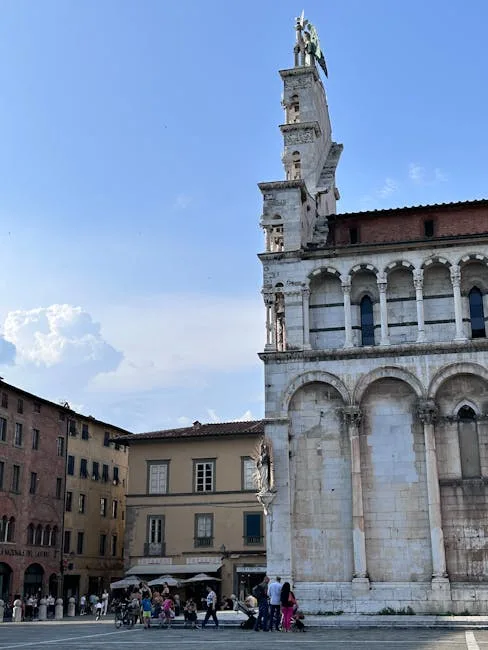
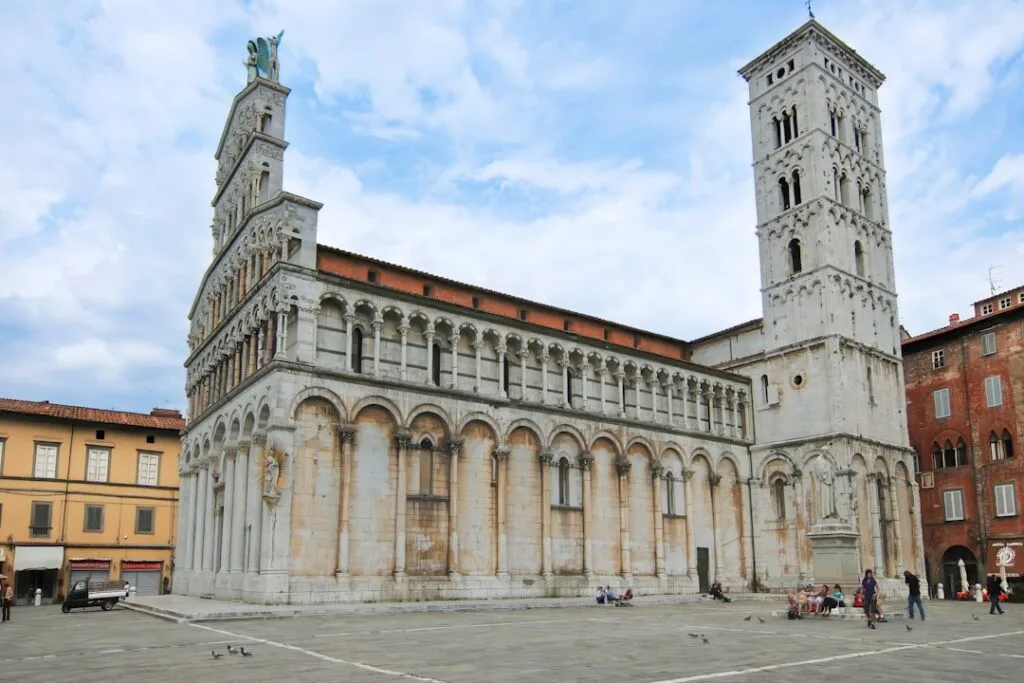
San Michele in Foro, standing on Piazza San Michele, might be the most iconic image of Lucca. Address: Piazza San Michele, 55100 Lucca LU, Italy. Its exuberant façade, with small columns, statues and niches, showcases late Romanesque sculptural virtuosity. Originally the church stood on the Roman forum (hence the name « in Foro »). The simpler interior nevertheless hides panels, altars and relics that recount medieval religious life.
Hours and fees (indicative):
- Opening hours: generally 9:00–12:30 and 15:00–18:30. Closed during some services. Opening hours may be later in winter.
- Entrance fee: free or voluntary donation; paid guided tours may be offered (€5–10 depending on the service).
What to look for:
- At San Frediano, study the façade mosaic: largely medieval, it shows the Byzantine influence in Tuscany.
- At San Michele in Foro, take time to observe the stacked registers of sculpture on the façade — each level tells a precise iconographic story (angels, biblical scenes, saintly figures).
- Local life: these piazzas host markets and cafés; enjoy an espresso on the square to watch daily life before entering the church.
Click here to join a 2-hour guided walking tour
Other medieval churches and hidden treasures: San Francesco, Oratorio di San Giuseppe and private chapels
Beyond the main monuments, Lucca is full of small medieval churches and oratories worth seeking out. The Basilica di San Francesco (Piazza San Francesco, 55100 Lucca LU, Italy) is a sober Franciscan building prized for harmonious proportions and an appealing cloister. It sometimes hosts exhibitions and concerts; its atmosphere is ideal for meditation and listening to sacred music during Sunday services.
Hours and fees (indicative):
- San Francesco: typically open 9:00–12:30 and 15:00–18:00. Free visit with suggested donation (€1–3).
- Oratorio di San Giuseppe (Via San Giuseppe, near the historic center): open occasionally for guided tours and concerts, often by reservation or during heritage days. Variable fees, usually €3–6 for a guided visit.
Among the hidden gems are private chapels and religious residences turned into small museums, including chapels accessible via lesser-used corridors and cloisters. These spots showcase partially restored frescoes, altarpieces and votive paintings preserved in niches. They sometimes take a little effort to find: ask Duomo staff or the tourist office (IAT — Ufficio Informazioni e Accoglienza Turistica, Via Fillungo 3) for keys to chapels that aren’t regularly open.
Tips for finding hidden treasures:
- Check with the tourist office: they often hold keys and the schedules for lesser-known chapels.
- Join a themed guided tour (Romanesque architecture, funerary sculpture, mosaics): these 1.5-hour tours usually cost €10–20 and can open doors closed to the general public.
- Respect and behavior: in small chapels still used for worship, keep your voice low, turn off flash and avoid provocative poses (it’s about cultural respect).
Click here to book a historical walking tour of Lucca
Local practical tips, food and timing to enrich your church trail
Visiting Lucca’s medieval churches is more rewarding when you pair heritage with local pleasures. Here are concrete tips to pace your day and make the most of the experience.
Best times to visit:
- Morning (9:00–11:30): soft light on façades, fewer people, possible morning services.
- Late afternoon (17:00–19:00): golden light, a more intimate atmosphere, cafés and bars come alive.
- Evening concerts: check local listings — many churches offer early music concerts (tickets €8–20 depending on the event).
Food and coffee stops nearby:
- Bar Pasticceria di Piazza San Michele (around the piazza): perfect for a quick espresso and local focaccia.
- Trattoria da Leo (Via Fillungo) or Osteria Baralla (Via degli Asili): great spots for Tuscan dishes after your visit — consider booking for dinner.
- Local specialties to try: bucci (Lucchese biscuits), farro soups, local olive oil, and Tuscan red wine (local Chianti).
Heritage respect and safety:
- Clothing: cover shoulders and knees if you plan to enter places of worship — some sanctuaries deny access to overly revealing attire.
- Behavior: avoid bringing large suitcases or bulky bags; some churches have no storage space.
- Safety: Lucca is generally safe, but keep your bag close in tourist areas and on busy squares.
Additional practical info:
- Tourist office (IAT Lucca) — Via Fillungo 3, 55100 Lucca LU: hours vary, often 9:00–18:00, offers maps and ticketing information.
- Toilets and breaks: cafés on the main squares; public restrooms are limited — carry small change.
- Combined tickets: sometimes available for the Duomo + Museum + Cloister; ask reception for a reduced package (often a €1–2 saving per person).
Click here to taste Tuscany on a guided food tour
Conclusion: Taking Lucca home in your memory — beyond the façades
A medieval church trail in Lucca is much more than an inventory of buildings: it’s an immersion into how art, faith and civic life have intertwined over centuries. Walking Piazza San Michele, feeling the solemnity of San Martino’s Duomo, admiring San Frediano’s mosaic and discovering discreet little chapels, you’ll collect impressions — sometimes moving — that tell the city’s story differently. Every stone, sculpture or altarpiece is a fragment of social history: tombs of influential families, pilgrims’ offerings, iconographic cycles meant to teach a largely illiterate medieval population.
For travelers who want to leave richer, I recommend pairing the church trail with contemplative pauses: a sung mass at the Duomo, an early music concert in a basilica, or simply a coffee on a piazza terrace to watch local life. Bring a notebook to jot down artists’ names, dates and details that strike you; those notes are keys to deepen your understanding back home.
Click here to book your spot for a Puccini Festival concert
Finally, remember that Lucca is found in its details: the worn stone of columns, traces of successive restorations, forgotten inscriptions on a moved sarcophagus. By respecting the sites, joining guided tours and talking to locals (priests, guides, craftsmen), you’ll leave with a livelier, subtler picture of the city. Whether your trail lasts a few hours or several days, Lucca rewards curiosity and respect: go meet its medieval churches and let yourself be surprised by the silent poetry of their stones.