





Introduction
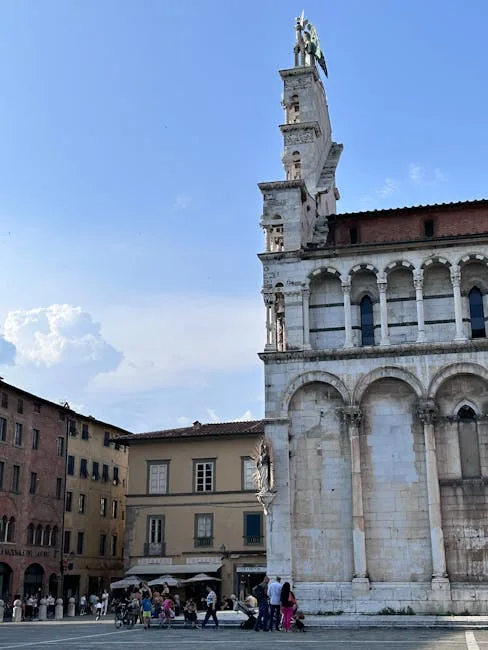
Lucca (Italian: Lucca) is a small Tuscan town that feels like it was lifted from a storybook: intact city walls, quiet alleys, sunlit squares and a wealth of religious monuments where history is written in stone. At the heart of this medieval city stands the Lucca Cathedral, officially known as the Duomo di San Martino. Modest in some ways yet rich in treasures, this monumental building is a must-see for anyone who wants to grasp the religious, artistic and civic soul of Lucca. Whether you’re into sacred art, fascinated by Romanesque and Gothic architecture, or simply chasing authentic Italian atmospheres, the cathedral delivers a layered experience: the hush of its chapels, the gleam of marble, the mysteries of its reliquary and the views from nearby squares.
In this essential guide I offer a full, practical exploration of Lucca Cathedral: its history, art, the treasury, opening hours, prices and plenty of local tips to make your visit go smoothly. You’ll find precise, usable information: exact addresses, prices in euros, typical opening times, routes from the main arrival points in Lucca, and tricks to avoid crowds or spot details many visitors miss. I’ve also included recommendations for continuing your day around the Duomo — cafés, nearby museums and walks along the famous walls.
The cathedral itself is more than a building: it’s a palimpsest of eras and influences. Its façade, chapels, crypt and treasure tell centuries of sacred art, from Romanesque sculpture to Renaissance altarpieces. Among the most moving pieces are the Volto Santo (the famed wooden crucifix venerated since the Middle Ages) and works by local and Tuscan masters. The adjacent museum, the Museo della Cattedrale, helps place these works in their historical context by displaying relics, reliquaries and sculptures.
Finally, I encourage you to read this guide with the idea that Lucca is best discovered slowly: sit for a while on a bench in Piazza San Martino, watch the polychrome façades glow in the sun, listen to the Duomo’s bells at dusk. The sections that follow will walk you step by step through preparing for and enjoying a thorough, pleasant and respectful visit.
 Click here to book your guided tour of S. Martino and the town centre
History and architecture: understanding the Duomo di San Martino
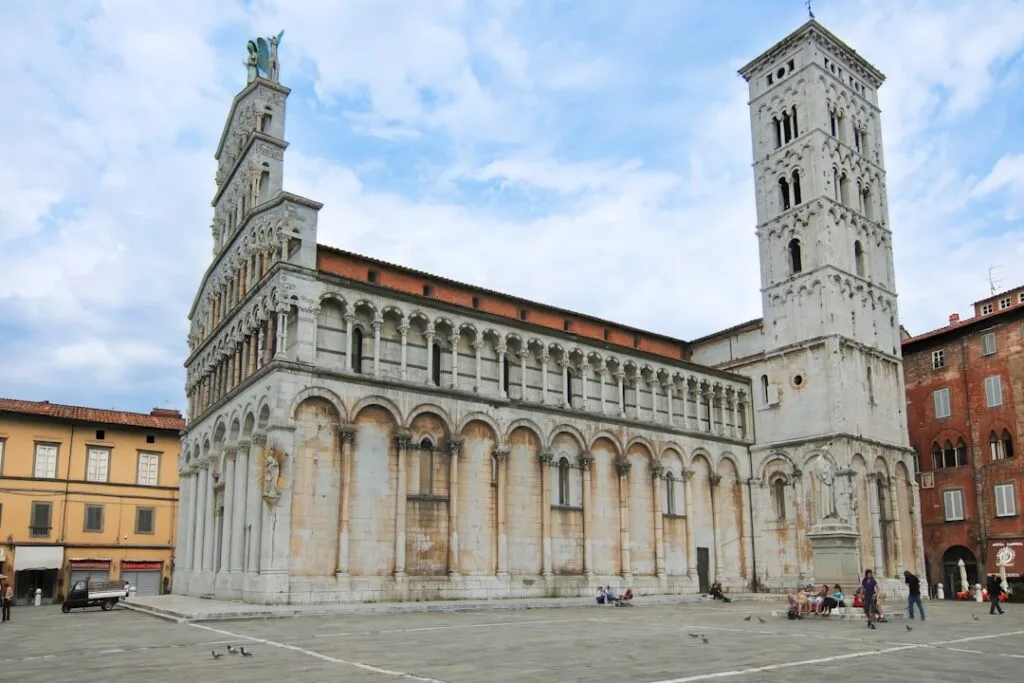
The Cathedral of San Martino is a living testament to the architectural and religious transformations of Lucca. Built on the site of an earlier church, the cathedral underwent multiple building campaigns from the 11th to the 18th century. The result is a harmonious mix of Romanesque, Gothic and Renaissance elements. The marble-and-stone façade is restrained yet elegant, articulated by arches, pilasters and carved portals. The main entrance faces Piazza San Martino (Piazza San Martino, 55100 Lucca LU, Italy), a small square where the building converses with everyday urban life.
Inside, the cathedral is laid out with three naves separated by massive columns whose capitals still show carved decoration. The central space leads to the choir and side chapels, each decorated at different times with altarpieces, paintings and marble altars. One of the most striking elements is undoubtedly the Volto Santo, a carved wooden crucifix venerated since the Middle Ages and set within an elaborate liturgical display. The Volto Santo is housed in a dedicated space, often protected behind a grille or reliquary, and stands among the most historically charged objects in the cathedral.
Descending to the crypt reveals remnants of earlier churches and a more intimate, almost introverted atmosphere. The crypt sometimes hosts temporary exhibitions related to the city’s ecclesiastical history. Right next door, the Museo della Cattedrale preserves sculptures, liturgical objects and informational panels that place the Duomo in its broader context. Reading the inscriptions, dates and symbols will give you a clear picture of the donations, brotherhoods and families that shaped the building.
From an architectural perspective, look out for these details: alternating polychrome marbles in certain chapels, Gothic pointed arches contrasting with Romanesque vaults, and visible restorations where materials and patina differ. The many alterations show that the cathedral was never static: it evolved with the liturgical and artistic needs of the Lucchese community. Appreciating these historical layers greatly enriches the visit and helps you understand the balance between sacred and civic life that defines Lucca.
Click here to discover Lucca’s history on a guided tour

Descending to the crypt reveals remnants of earlier churches and a more intimate, almost introverted atmosphere. The crypt sometimes hosts temporary exhibitions related to the city’s ecclesiastical history. Right next door, the Museo della Cattedrale preserves sculptures, liturgical objects and informational panels that place the Duomo in its broader context. Reading the inscriptions, dates and symbols will give you a clear picture of the donations, brotherhoods and families that shaped the building.
From an architectural perspective, look out for these details: alternating polychrome marbles in certain chapels, Gothic pointed arches contrasting with Romanesque vaults, and visible restorations where materials and patina differ. The many alterations show that the cathedral was never static: it evolved with the liturgical and artistic needs of the Lucchese community. Appreciating these historical layers greatly enriches the visit and helps you understand the balance between sacred and civic life that defines Lucca.
Practical visit info: hours, prices, access and rules
To prepare your visit, here are the practical, up-to-date details to know. Exact address: Cattedrale di San Martino, Piazza San Martino, 55100 Lucca LU, Italy. The Duomo sits in the heart of the old town, a few minutes on foot from the main parking areas and from Lucca train station. If you arrive by car, favor peripheral parking (for example Parking Piazza Napoleone or Parking Parcheggio Stazione) and then walk or take a bus into the center.
Typical opening hours (check before you travel on the official site or at the tourist office):
- Cathedral (Duomo di San Martino): 09:30 – 12:30 and 15:00 – 18:00 (Monday to Saturday). On Sundays, visits are usually possible after services, typically from around 13:30 until 17:30.
- Museo della Cattedrale: 10:00 – 17:00 (may close briefly in the early afternoon for a break).
- Religious services and masses: check the notice at the entrance or the parish website for exact mass times (mornings and sometimes evenings).
Indicative prices (in euros). Rates can change at the cathedral’s administration; have cash or a card ready:
- Cathedral entry: free to enter the main space (in some cases a voluntary contribution is requested).
- Museo della Cattedrale: €4.00 per person.
- Combined ticket (Museum + Treasury + access to the Volto Santo reliquary): €6.00.
- Reduced rates: students, seniors and groups may be eligible for discounts (typically €2.00–€4.00 depending on category).
- Guided tours: around €8.00–€12.00 per person if offered by the cathedral; more if you hire a private agency.
Visiting rules: the cathedral is a place of worship — respect devotional signs and areas closed for ceremonies. Dress politely (shoulders and knees covered). Tripods and filming are often prohibited, and flash photography is usually not allowed near valuable works (notably the Volto Santo). Also, avoid loud conversation; the site is intended for contemplation.
Click here to book a walking tour of Lucca’s historic centre
The treasures to see: major works and details you shouldn’t miss
Visiting the Duomo di San Martino is like flipping through an album of religious works and historical treasures. Here’s a selection of the most remarkable pieces and spaces, with tips on how to spot them.
- The Volto Santo: likely the cathedral’s most famous symbol. This carved wooden crucifix has been the object of deep veneration since the Middle Ages. It’s displayed in a shrine or behind a grille, and its iconography sparks debate and study: it blends medieval austerity with striking expressiveness. Allow some time to observe it from a respectful distance and follow the staff’s instructions.
- The Tomb of Ilaria del Carretto: sculpted by Jacopo della Quercia (early 15th century), this tomb is a masterpiece of Italian funerary sculpture. The finely carved drapery, the serene expression of the face and the detail of the heraldic elements make it a must-see.
- The pulpit: some Tuscan cathedrals feature remarkable carved pulpits; study the bas-reliefs and the high quality of the stonework.
- Altarpieces and paintings: several chapels house altarpieces by local and Tuscan painters. Look for signatures, dates and biblical scenes that reveal local devotional practices.
- The treasury: this collection contains reliquaries, chalices and liturgical items in gold, silver and enamel. The goldsmithing is often exquisitely detailed and speaks to Lucca’s historical wealth.
For each major piece, approach slowly, read the labels in the Museo della Cattedrale, and don’t overlook architectural details: carved capitals, Latin inscriptions or wall fragments. The museum offers explanatory panels in Italian and English; if you have a printed guide or a tour app, use it to deepen your understanding.
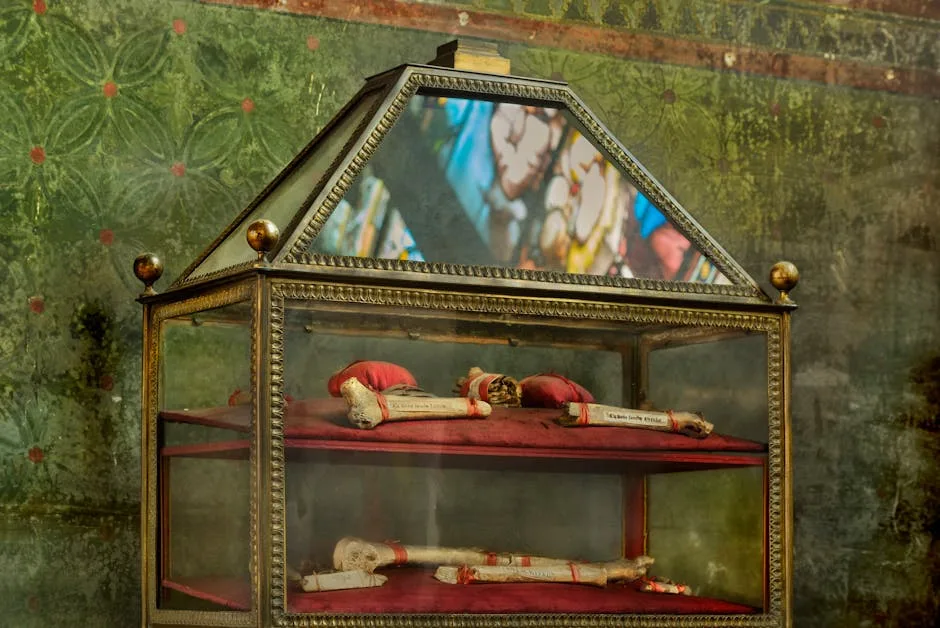
Observation tip: use the “three looks” rule: 1) a broad first look to grasp the spatial effect, 2) a closer second look for sculpted or painted details, 3) a third, contextual look (read the labels, note the work’s placement and liturgical function). This method helps you capture both the immediate beauty and the historical meaning.
Routes and activities around the Cathedral
A visit to the Duomo easily fits into a broader walk through Lucca. Here are routes and suggestions to extend the experience on foot over a few hours.
Classic route (1–2 hours):
- Start at Piazza San Martino (in front of the cathedral) to admire the façade and snap a few photos.
- Take Via Fillungo, Lucca’s main shopping street lined with artisan shops and cafés — stop at the Bar Civili for an espresso.
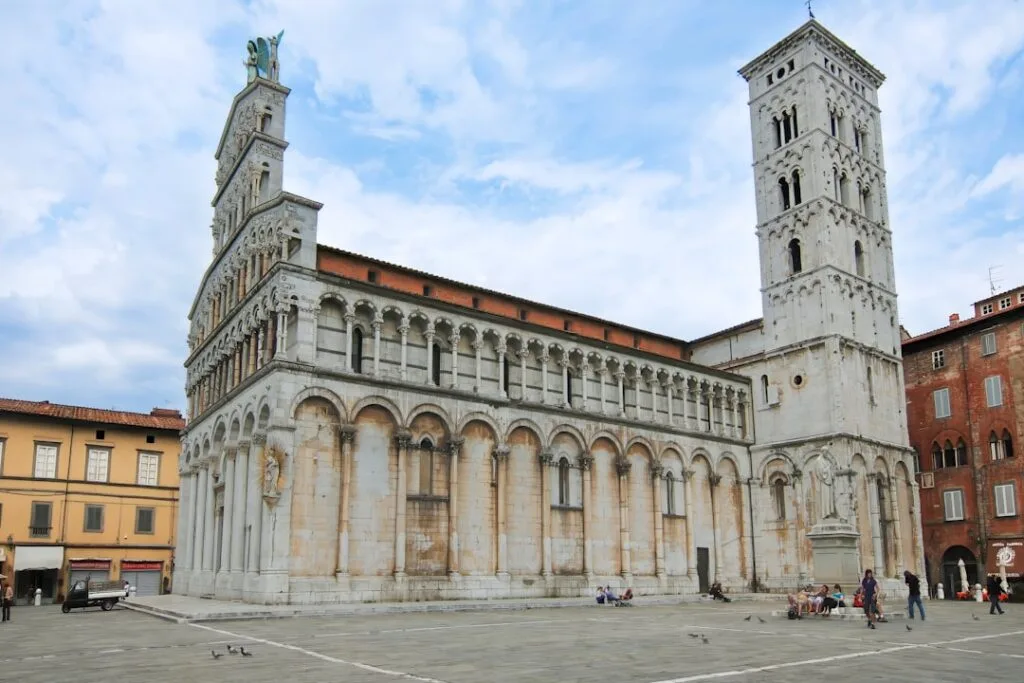
- Visit the Chiesa di San Michele in Foro (Piazza San Michele, 55100 Lucca LU), just a few minutes’ walk away: its sculpted façade is spectacular and provides a nice contrast with the Duomo.
- Walk the Mura di Lucca (the city walls) for a panoramic stroll: main access points are Piazza Napoleone or Porta San Donato. The wall promenade is ideal in late afternoon.
Foodie route (afternoon): after visiting the Duomo and the museum, take a break in a local osteria. Recommendations: Osteria Baralla for Tuscan dishes (address: Via Santa Lucia, near the Duomo) or Trattoria Da Leo (Via San Paolino) for home-style cooking. Don’t miss the local focaccia, often sold in bakeries near the cathedral.
Cultural half-day: combine the Duomo with a climb up the Torre Guinigi (Via Sant’Andrea, 33, 55100 Lucca LU) for a unique panoramic view over Luccha’s roofs and the oak trees planted on its summit. Then take time to visit the Palazzo Pfanner (Via degli Asili Olivieri, 13) and its baroque garden for a complementary atmosphere.
Logistics tips: Lucca is ideal to explore on foot. Distances between monuments are short, but cobblestones mean you’ll want good shoes. In high season, early morning or late afternoon are the best times to avoid tour groups. The station-area car parks are convenient for dropping off luggage before exploring the historic centre.
Click here to book a guided walk of Lucca’s walls
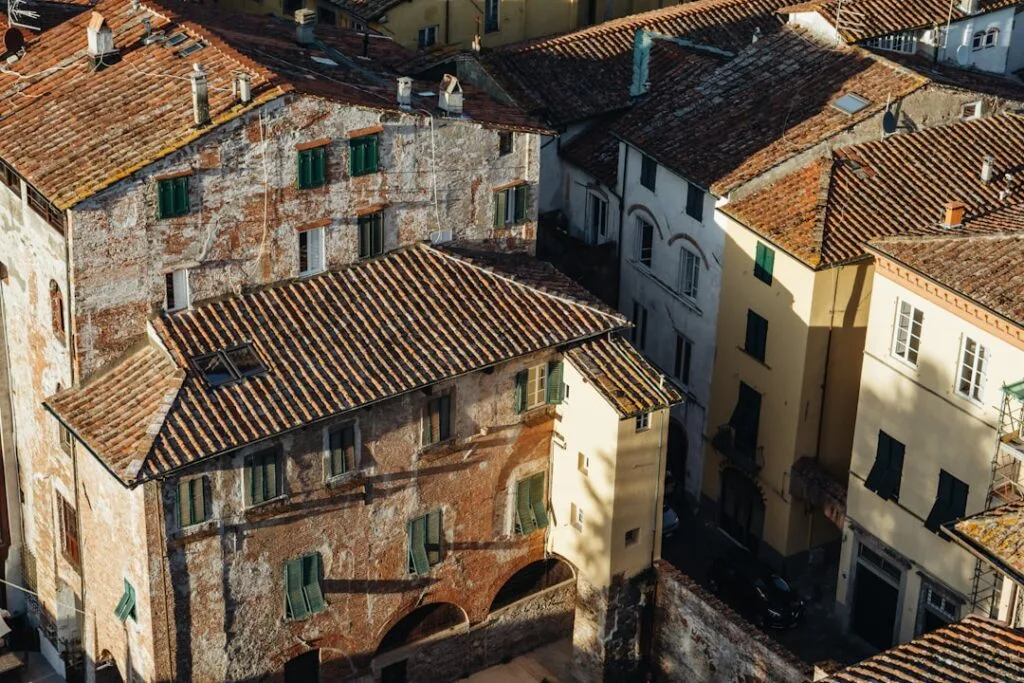
Local practical tips and recommendations for a successful visit
Here are a set of concrete, locally-tested tips to help you make the most of your time around Lucca Cathedral.
- Best time to visit: early morning (9:30–10:30) for soft light on the façade and fewer visitors. Late afternoon, just before closing, also gives warm light great for photos.
- Length of visit: allow 45–90 minutes for the cathedral and an extra 30–60 minutes for the Museo della Cattedrale. If you combine several sites, plan for a half-day.
- Guides and audio guides: if you want deeper historical context, book a guided tour. Some tours include privileged access to the treasury or detailed explanations about the Volto Santo.
- Accessibility: the historic centre is largely pedestrian but paved; check indoor accessibility if you have specific needs. Staff at the entrance can sometimes assist visitors with reduced mobility.
- Be mindful of mass times: during services, parts of the Duomo may be closed to tourists. Respect signs and barriers and prefer visiting outside major worship times (Sunday mornings, religious holidays).
- Security and respect: don’t touch artworks or reliquaries. Non-flash photography is generally allowed, but avoid intrusive selfies during prayers.
- Where to buy tickets: buy tickets at the Museo della Cattedrale ticket office or via the official website if available. Combined tickets are often the best value if you want to see the treasury and exhibitions.
Click here to book a private guided tour with a local guide
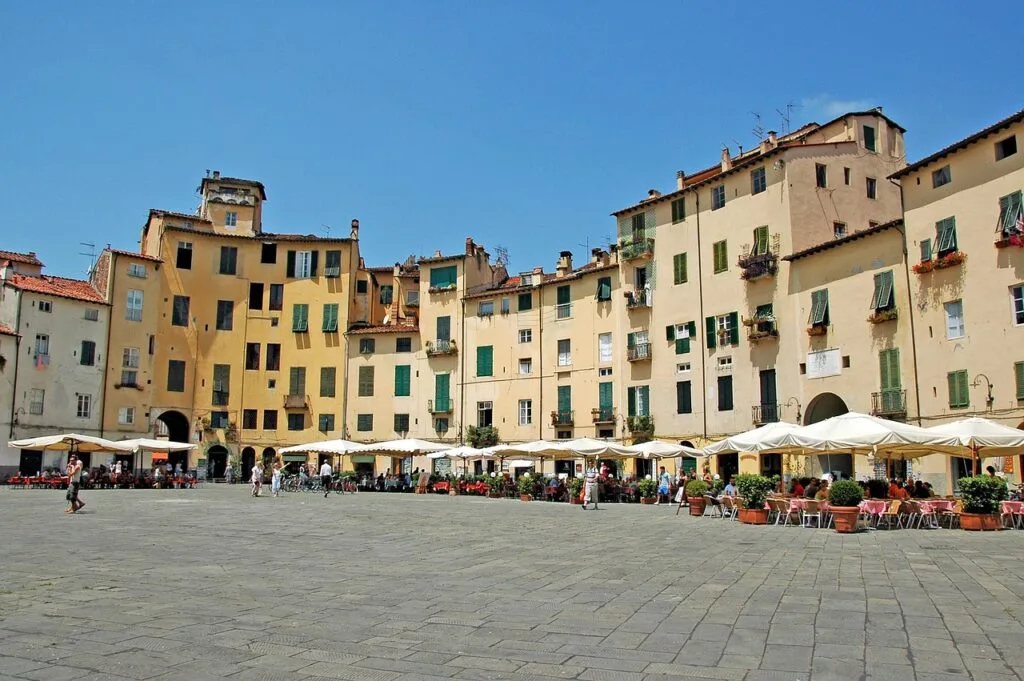
Local tip: for a truly Lucchese coffee break, pick a small café on a side square rather than the establishments on Via Fillungo — you’ll notice the difference in both price and atmosphere. For cathedral-related souvenirs, favor shops in the adjacent narrow streets that sell reproductions of religious art, postcards and books on Lucca’s history.
Conclusion
Lucca Cathedral, the Duomo di San Martino, is far more than a monument: it’s a living place rooted in a city that has preserved its medieval soul while remaining welcoming and accessible. Walking its naves, chapels and museum, you encounter centuries of art, faith and history. Major works like the Volto Santo or Ilaria del Carretto’s tomb deliver strong aesthetic impressions, while architectural details tell the story of evolving styles and religious practices.
To prepare your visit, keep in mind the practical information in this guide: the exact address (Piazza San Martino, 55100 Lucca LU, Italy), typical opening hours, indicative prices and local tips. Arrive early to enjoy a quieter Duomo, opt for the combined ticket if you want to see the museum and the treasury, and stroll the surrounding alleys to sample Tuscan specialties after your cultural tour.
Finally, give yourself time: the best way to appreciate Lucca and its cathedral is to walk slowly, listen to the bells, have a coffee in a small square and watch daily life unfold in the historic centre. Whether you’re on a cultural trip, a pilgrimage or just passing through, Lucca Cathedral invites you to a meditative, aesthetic experience full of discoveries and quiet moments that linger in memory.