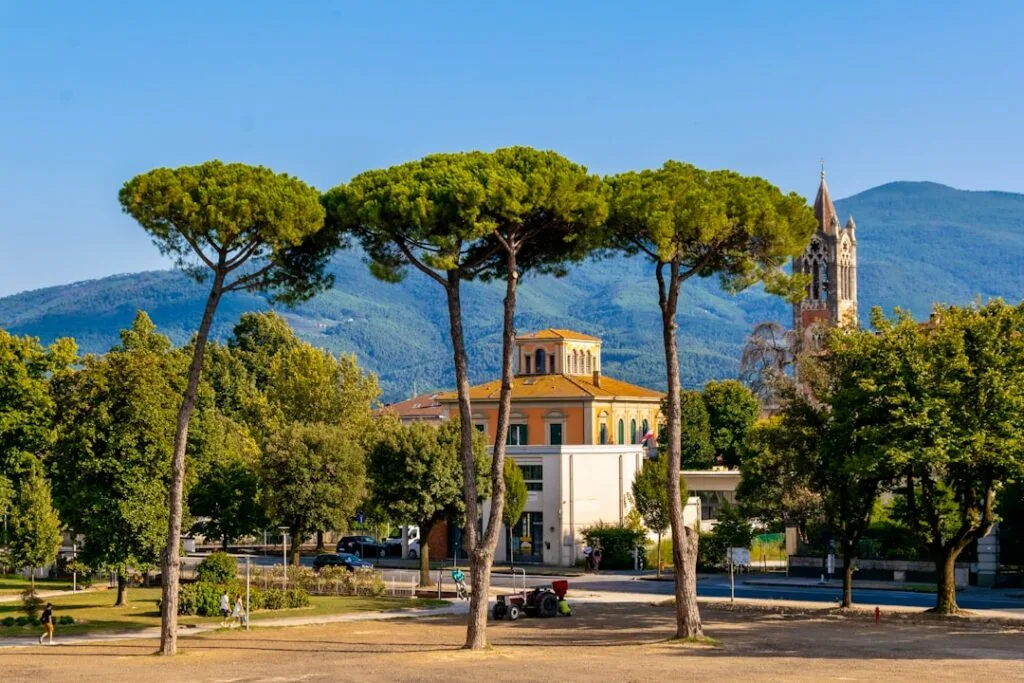






Introduction: One hour to feel the soul of Lucca
Lucca, a compact Tuscan town of narrow lanes and sunlit squares, is best discovered from its green belt: the city walls (Mura di Lucca). Built between the 16th and 17th centuries atop older medieval fortifications, these walls were turned into a planted promenade in the 19th century that encircles the old town for roughly 4 kilometers. A one-hour walk, at a steady but relaxed pace (4–5 km/h), lets you cover part or all of the circuit depending on your stops — and, more importantly, get a sense of the city’s geography: how each stretch embraces squares, towers, gardens and unexpected viewpoints.
This quick loop packs history, architecture and local atmosphere into a short timespan: from the sober grandeur of the Cattedrale di San Martino (Duomo di San Martino) to the whimsy of the Torre Guinigi crowned by a centuries-old oak, and the winding Piazza dell’Anfiteatro that preserves the footprint of the Roman amphitheater. The walls themselves are a suspended garden: plane trees, benches, bike lanes and rooftop-and-bell-tower views. It’s a perfect route for travelers short on time who want a rich first impression — memorable photos, orientation points for a longer return visit, and quick tasty stops.
In this article you’ll find a step-by-step route, exact addresses of the main sights you’ll pass, typical opening hours and entrance fees, plus practical local tips (best time of day, where to sit, restrooms, transport). The goal is to help you plan a genuinely productive, pleasant and safe hour: where to start — for example at Piazza Napoleone — how long to allow for climbing a tower, where to grab a gelato after the walk, and how to tweak the itinerary by season or weather.
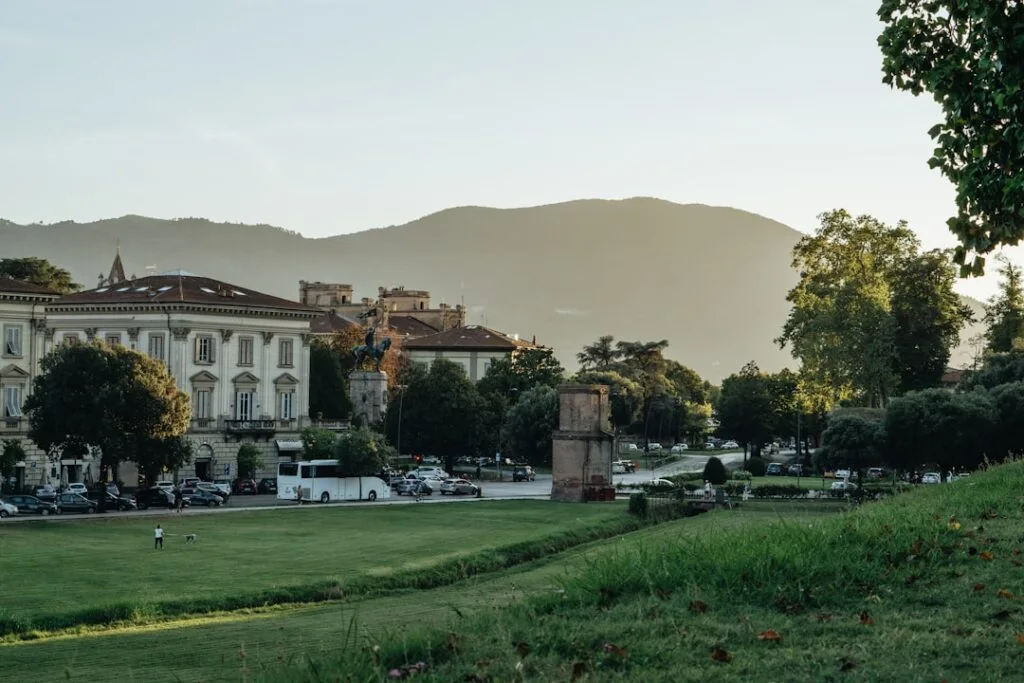
I’ve also added visual cues to help with photography: the best angles from the walls, how to frame the Torre Guinigi with its tree, and the time of day when Piazza dell’Anfiteatro glows in golden light. Put on comfortable shoes, bring a bottle of water and your camera: an hour on the walls can become an hour of Luccan grace.

Step-by-step route: start and finish the walk in an hour
Recommended starting point: Piazza Napoleone (Piazza Napoleone, 55100 Lucca LU, Italy). This large square, ringed by palaces and cafés, is an ideal reference point. From the square you can easily reach the wall promenade — look for access around Viale Regina Margherita or Porta San Pietro depending on the direction you choose. If you prefer clockwise, turn right to ascend onto the wall; for counter-clockwise, turn left.
 Click here to book your guided walk of Lucca’s city walls

Estimated duration: the full walk around the walls is about 4 km. In one hour you can:
- complete the full circuit at a brisk pace without long stops (fast walk, 4–5 km/h);
- or do half the loop and spend 10–15 minutes climbing the Torre Guinigi and 10 minutes lingering at the Piazza dell’Anfiteatro and the Duomo di San Martino.
Suggested one-hour itinerary (flexible):
- 0–10 min: start at Piazza Napoleone, ascend the walls heading west toward Porta San Pietro. First views over rooftops and the distant countryside.
- 10–25 min: follow the southern stretch of the walls toward Torre Guinigi (Via Sant’Andrea, 25, 55100 Lucca LU, Italy). If you climb (allow 15–20 minutes for visit + ascent), be prepared to skip part of the loop.
- 25–40 min: cross the historic center; if you don’t climb the tower, descend to the Piazza dell’Anfiteatro (Piazza dell’Anfiteatro, 55100 Lucca LU, Italy) for a photo stop and a quick coffee.
- 40–60 min: return along the northern stretch of the walls, admiring the Duomo and the palaces, then back to Piazza Napoleone.
Timing tips: start early morning (8:00–9:30) to avoid crowds and enjoy soft light; the late-afternoon slot (16:30–18:30) often delivers beautiful golden light for photos. The busiest hours are typically 11:00–16:00, especially high season (April–September).
Sights and points of interest visible from or near the walls
Walking the Mura di Lucca brings several iconic sights into view. Here are the main landmarks (addresses, fees and hours to note) you’ll see or can easily reach from the walls.
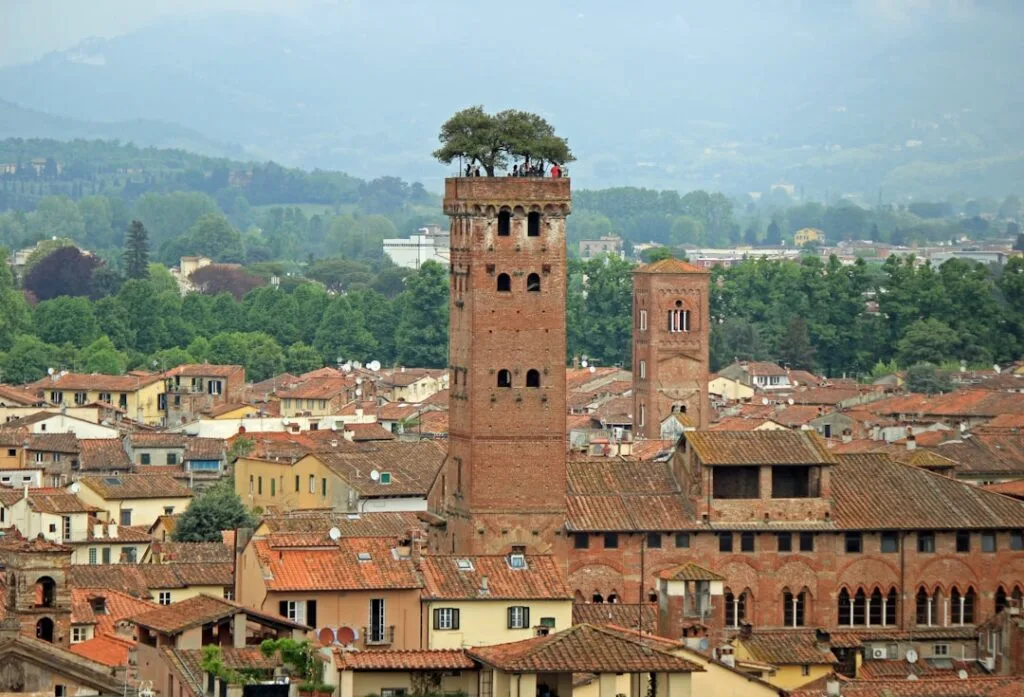
Torre Guinigi
Address: Via Sant’Andrea, 25, 55100 Lucca LU, Italy. Torre Guinigi is a medieval tower famous for its rooftop garden: a small grove of oak trees at the top that offers a unique vantage point over the city. The climb is via a narrow staircase; it’s steep but rewarded with a 360° view.
Opening hours (indicative): generally open daily; common hours: 9:00–19:00 (high season); reduced hours in low season. Entrance fee: around €5.00–€7.00 per person. Details can change; check official hours on the day of your visit.
Piazza dell’Anfiteatro
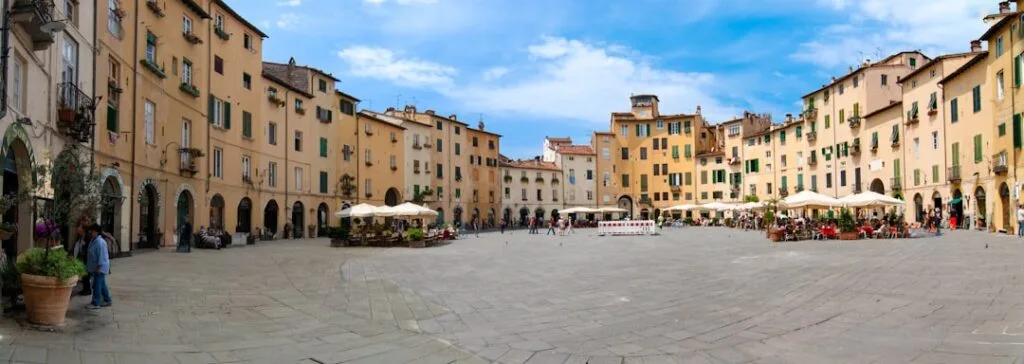
Address: Piazza dell’Anfiteatro, 55100 Lucca LU, Italy. This oval square follows the shape of the ancient Roman amphitheater, with colorful façades and terraces that look down onto the piazza. It’s a great stop for a coffee or gelato.
Atmosphere: the piazza is perfect for soaking up local life — vendors, musicians and sometimes craft markets. The façades house shops and restaurants; in the evening the square lights up and the vibe becomes very convivial.
Cattedrale di San Martino (Duomo di San Martino)
Address: Piazza San Martino, 55100 Lucca LU, Italy. The Duomo, dedicated to Saint Martin, is notable for its white marble-striped façade and an interior rich in artworks, including the Croce di San Martino and paintings from the Luccan school.
Opening hours (indicative): usually open for services and tourist visits; typical hours: 8:30–12:30 and 15:00–19:00. Price: visiting the cathedral itself is often free, while access to certain chapels or attached museums may cost around €2.00–€4.00.
Palazzo Pfanner
Address: Via degli Asili, 33, 55100 Lucca LU, Italy. This 17th-century palace features a baroque garden visible from the street and a small interior museum with period furnishings and historic medical instruments. It’s a pleasant stop if you have a bit more time.
Hours and price (indicative): open most days, often 9:30–13:00 and 15:00–18:30; approximate entrance fee: €5.00–€6.00.
Sensory experience: what you’ll see, hear and taste
Walking Lucca’s walls isn’t just about checking off sights: it’s a multi-sensory experience. Visually, you’ll alternate between views of rust-colored tile roofs, stone bell towers and flower-filled windows. The tall plane trees lining the promenade form shaded vaults, especially welcome in summer. Public benches let you sit and watch city life unfold — cyclists, strollers, families and joggers constantly pass by.
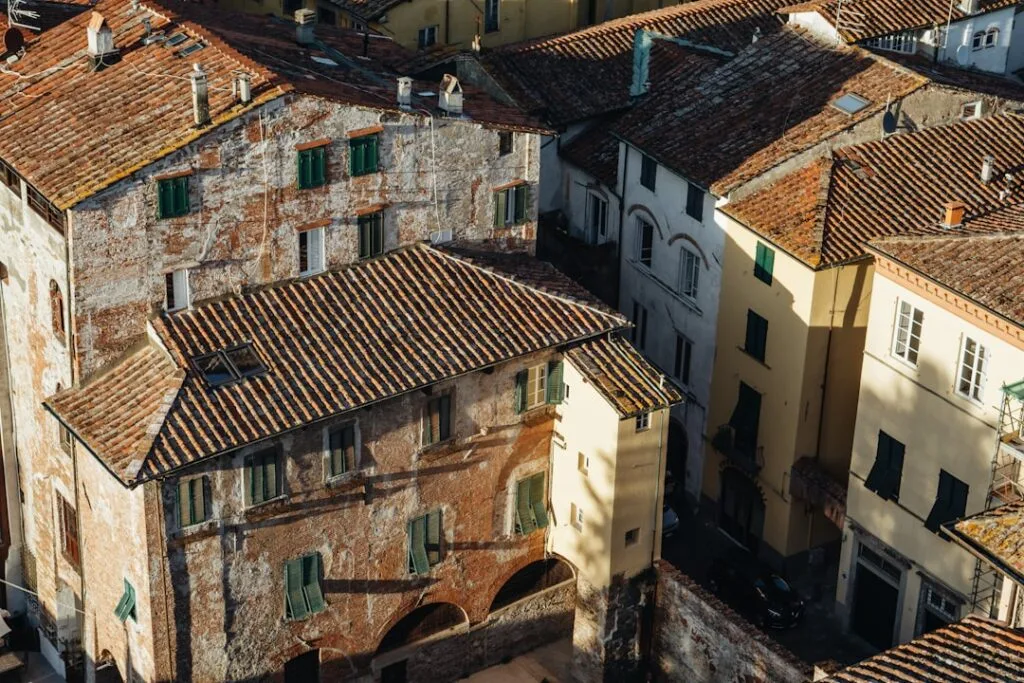
Sound: the city offers a gentle background hum — church bells on the hour, Italian conversations, the click of bicycle pedals, sometimes a street violinist on a square. The inner lanes regain an almost secret calm: open a church door or slip into an alley to feel the change in atmosphere.
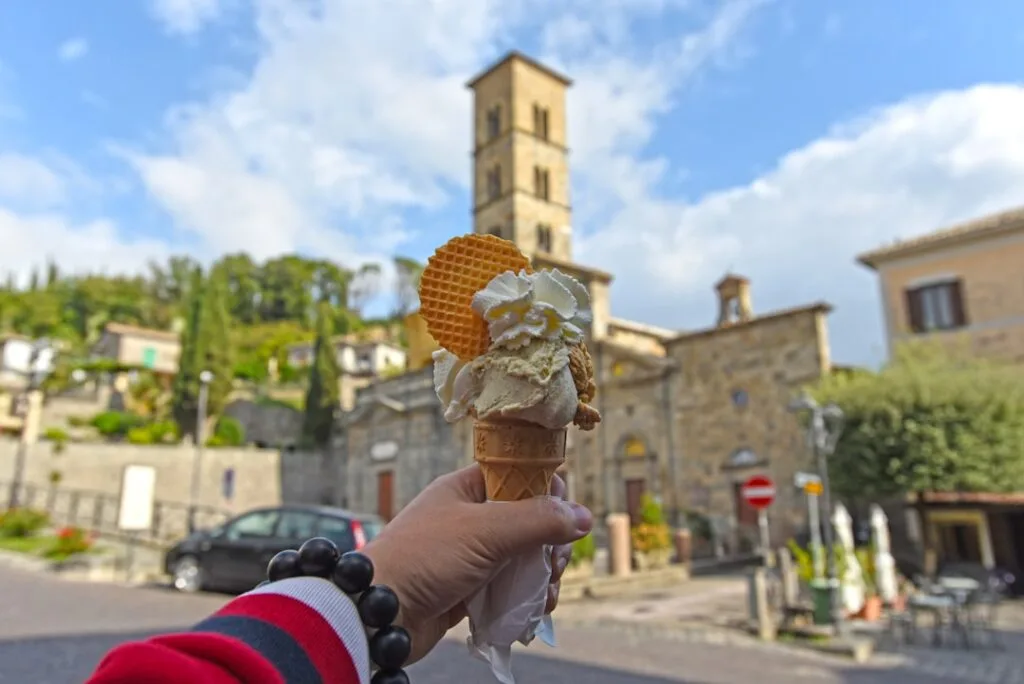
Taste: for a tasty break, look for a gelateria or a small café near the Piazza dell’Anfiteatro or on the main street Via Fillungo. For a quick local snack: a porchetta sandwich or a slice of local focaccia. Indicative prices: gelato ~€2.50–€4.00; espresso ~€1.00–€1.50; panino ~€4.00–€7.00.
Photography: the best times for photos are early morning (7:30–9:00) for soft colors and few people, or late afternoon (around 17:30–19:30) for golden light. Look for strong lines: the silhouette of Torre Guinigi with its tree, the oval shape of the Anfiteatro, or reflections on the marble slabs of the Duomo.
Practical local tips to make the most of your hour
Shoes and gear: choose comfortable walking shoes (soft sole, good grip). The walls are paved and some sections can be uneven after rain. Bring a bottle of water (there are public fountains in town) and, in summer, a hat and sunscreen.
Transport and parking: Lucca is about 20–30 minutes by train from Pisa (Pisa Centrale station) and has parking outside the walls. If you leave a car, use the « Parcheggio Palatucci » (Viale Europa) or « Parcheggio San Pietro » near Porta San Pietro; daily rates vary (roughly €2.00–€3.00 per hour in the center, long-term parking is cheaper). The area inside the walls is largely pedestrian.
Accessibility: the wall promenade is largely accessible to strollers and bikes, but some sections have steps to reach certain points. Visitors with reduced mobility should check access near Porta San Pietro and the main entrances; museums and churches vary in internal accessibility.
Toilets and comfort: plan to use a café restroom if needed; there are few public toilets on the walls themselves. Many cafés and restaurants will let you use their facilities if you buy something. If you’re short on time, get your coffee standing at the bar — in Italy it’s often much cheaper than sitting at a table.
Safety: Lucca is generally very safe; nonetheless, as in any tourist area, keep an eye on personal belongings (zippered bags, secure wallets). Pickpockets are mainly active in very crowded spots. At night the promenade is well lit but stick to main routes.
Weather and seasons: spring (April–June) and early autumn (September–October) offer the best balance of pleasant weather and moderate crowds. In full summer (July–August) expect high temperatures and busier streets. In winter the walk remains pleasant but museum hours shorten.
Plan what’s next: ideas to extend your visit after the hour
If your one-hour tour leaves you wanting more, here are a few walkable extensions from the walls.
- Museo Nazionale di Palazzo Mansi — Via Galli Tassi, 43, 55100 Lucca LU, Italy. A fine palace-museum to dive deeper into local art and history. Hours and prices vary; admission often around €6.00–€8.00.
- Orto Botanico Comunale di Lucca — Via San Maria Corteorlandini, 7, 55100 Lucca LU, Italy. A charming botanical garden for a peaceful green interlude.
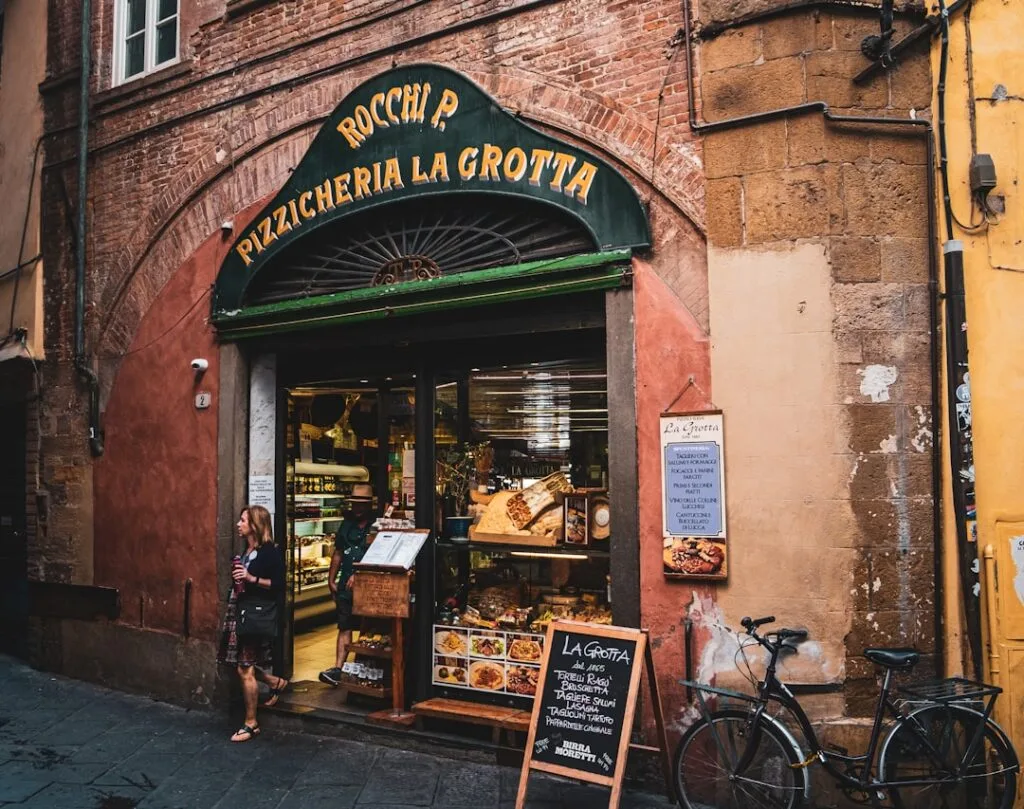
- Via Fillungo — the main shopping street of the center, ideal for artisan shops, specialty food stores and bookshops. Perfect for picking up a gastronomic souvenir (local olive oil, artisanal pasta).
If you cycle: rent a bike and ride the full perimeter of the walls (rental roughly €6.00–€12.00 per hour depending on the bike). The circuit by bike takes about 20–30 minutes without stops, leaving you plenty of time to explore the historic center.
Click here to book a City Bike rental in Lucca
Conclusion: Lucca in sixty concentrated minutes
A one-hour stroll around Lucca’s walls is surprisingly dense: in sixty minutes you’ll grasp historical layers, urban perspectives and the town’s gentle atmosphere. The walls are both a balcony on history and a living place where walkers, joggers and locals take their time. Start at Piazza Napoleone for a clear orientation, choose whether to climb the Torre Guinigi (Via Sant’Andrea, 25) for a unique panorama or linger at the Piazza dell’Anfiteatro for a coffee, and finish with a pass by the Duomo di San Martino (Piazza San Martino). The main addresses are easy to spot and make convenient landmarks for organizing your hour.
Allow for flexibility: adapt your pace to the weather, crowds and energy level. If you have more time, add an interior visit (Torre Guinigi or Palazzo Pfanner); if you’re rushed, structure your route to get the essential photos at the best light. Don’t forget the small pleasures: a cold gelato, an espresso at the bar, or simply sitting on a bench on the walls to watch Luccan life unfold below.
Finally, treat this one-hour walk as an invitation: Lucca rewards repeated discovery. After this first hour you’ll have reference points for longer returns, museum visits, church interiors, or getting lost in more secret alleys. The walls will have given you panorama and orientation; the city will offer its softness and surprises around every stone corner.
Click here to discover Lucca’s highlights on foot
