





Introduction
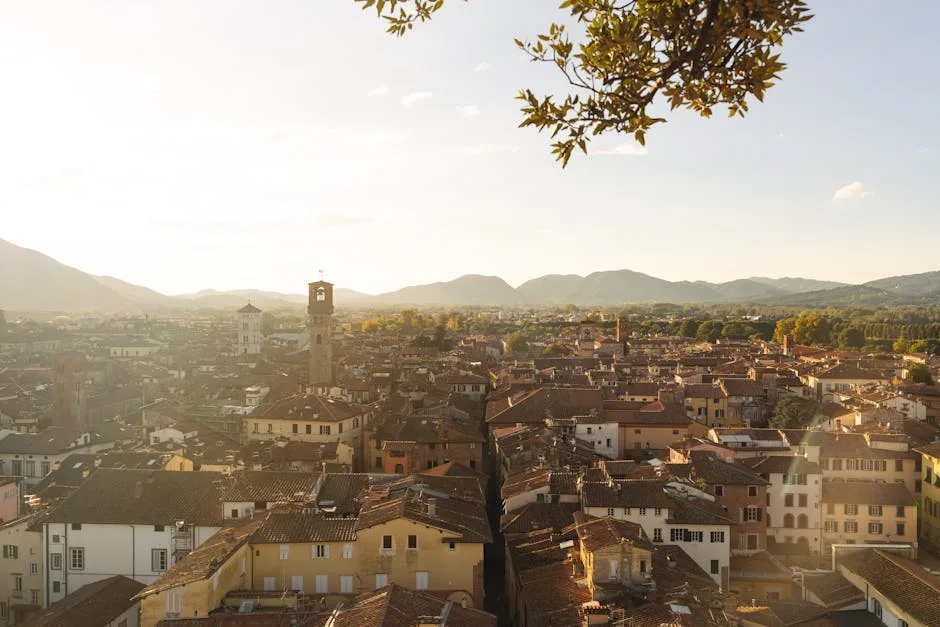
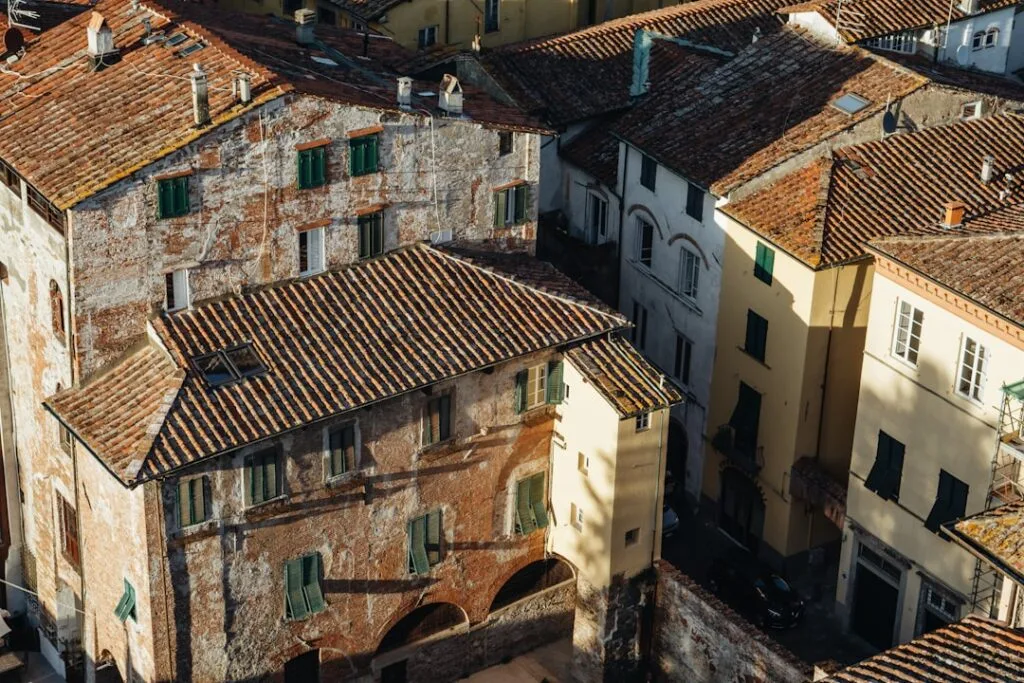
Wandering through the medieval heart of Lucca makes the passing of time feel tangible: tree-lined fortified walls encircle the town, cobbled lanes are flanked by stone houses, and sunlit squares host locals sipping coffee and reading the paper. Sitting in Tuscany, a short hop from Pisa and Florence, Lucca often feels like a compact open-air museum where history is part of daily life and every corner has a story. This walking route will guide you past the main monuments and everyday spots of the historic center, letting you soak up the authenticity of a medieval town. The goal is twofold: lay out a pleasant, logical stroll and provide practical info (addresses, opening hours, prices) so you can plan your visit without stress.
This route is designed to fit into a half-day (3–5 hours) if you move at a steady pace, or to fill a full day if you stop for coffee, a museum or lunch. It traditionally starts at one of the most convenient gates of the old town and follows a path that keeps a smooth flow between squares, churches, towers and gardens — while still letting you tweak the plan depending on what you want to do (photography, artisan shopping, sampling local treats). The tone here is both descriptive and practical: I include exact addresses, prices in euros and typical opening hours, plus local tips to dodge the crowds or track down the best gelato.
Before you set off, remember a few local realities: the old town is largely cobbled — sturdy shoes are essential; the city walls form a flat loop perfect for an easy walk; and schedules for churches and small museums can change seasonally, so I recommend checking official opening hours the day before you go. Throughout the route I’ll flag key photo spots, public restroom access and alternatives for meals (trattorie, enotecas, cafés). By following this guide you’ll not only see iconic sights — like Torre Guinigi, the Cathedral of San Martino, Piazza dell’Anfiteatro or Palazzo Pfanner — but also feel Lucca’s calm spirit, where music, gardens and craftmanship shape daily life.
Start and First Stop: Lucca’s City Walls (Le Mura di Lucca)
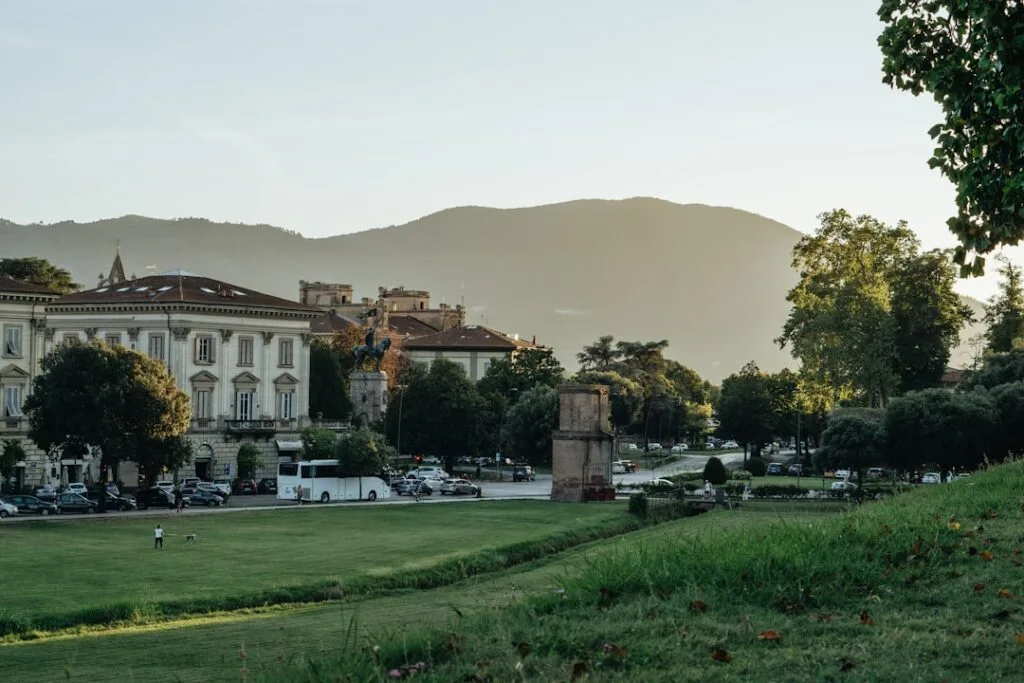
Address and description: Le Mura di Lucca wrap around the old town for about 4 km, forming a wide elevated promenade planted with trees — the perfect place to kick off your walk. The most convenient access points for the center are Porta San Pietro (Piazza San Pietro, 55100 Lucca LU, Italy) and Porta Elisa (Piazza Giuseppe Verdi, 55100 Lucca LU). The walls are free and open 24/7, offering panoramic views over the town, its bell towers and, on clear days, the Tuscan hills on the horizon.
Why start here: A stroll along the walls helps you get your bearings and gives you an overview of Lucca’s medieval layout. Locals use the promenade to cycle, run or walk their dogs — it’s a real slice of everyday life. The walls are broad (7 to 10 meters in places), so there’s plenty of room for groups and frequent photo stops. For sunrise or sunset, the top of the walls is hard to beat.
Practical tips: Allow 30–60 minutes to cover the section you want. If you’re avoiding crowds, go early (around 7:30–8:30am) or late afternoon. Benches and shady spots are common, but bring water and a hat in summer. Because the walkway is flat, it’s stroller-friendly and accessible to many visitors with reduced mobility, though some ramps to access the walls can be steep. There’s usually no gate or staff, but follow signage where it indicates a « zona sorvegliata » or bans cycling on certain stretches.
 Click here to book a guided tour of Lucca’s city walls
The Religious and Artistic Core: Cathedral of San Martino and Museo Nazionale di Villa Guinigi
Duomo di San Martino (Cattedrale di San Martino) – Address: Piazza San Martino, 55100 Lucca LU, Italy. The Cathedral of San Martino is Lucca’s main religious building, noted for its polychrome marble façade and an interior where art and devotion meet. Inside you’ll find the famous Volto Santo (the carved Holy Face), a medieval devotional work venerated for centuries, alongside notable paintings and sculptures.
Hours and prices: Generally the cathedral is open daily for visits and services. Typical hours: 8:30am–12:30pm and 3:00pm–6:30pm (seasonal variations). Entry to the worship area is free; however access to some museum spaces and the sacristy may be ticketed (combined Cathedral and Museo della Cattedrale ticket roughly €4–€6). Mass times (often Sunday morning and sometimes evenings) can restrict visitor access — always heed notices at the entrance.
Museo Nazionale di Villa Guinigi – Address: Via della Quarquonia, 25, 55100 Lucca LU, Italy. Housed in Villa Guinigi, this national museum displays a rich collection of medieval art and local sculpture. Highlights include painted panels, religious works and sacred objects. Typical hours: 8:30am–19:30pm (season-dependent). Admission: about €4–€7. Audio guides or English information leaflets are sometimes available.
Practical tips: Set aside at least 45 minutes for the cathedral and an hour for Villa Guinigi if you enjoy medieval art. Dress respectfully for places of worship (shoulders covered, no hats inside). If you’re traveling off-season (November–March), double-check for winter closures or reduced hours. An audio guide in the cathedral will deepen your understanding of the Volto Santo and the side chapels.
Click here to book a walking tour of Lucca city center
Civic Life and Squares: Piazza dell’Anfiteatro, Torre Guinigi and Shopping Streets
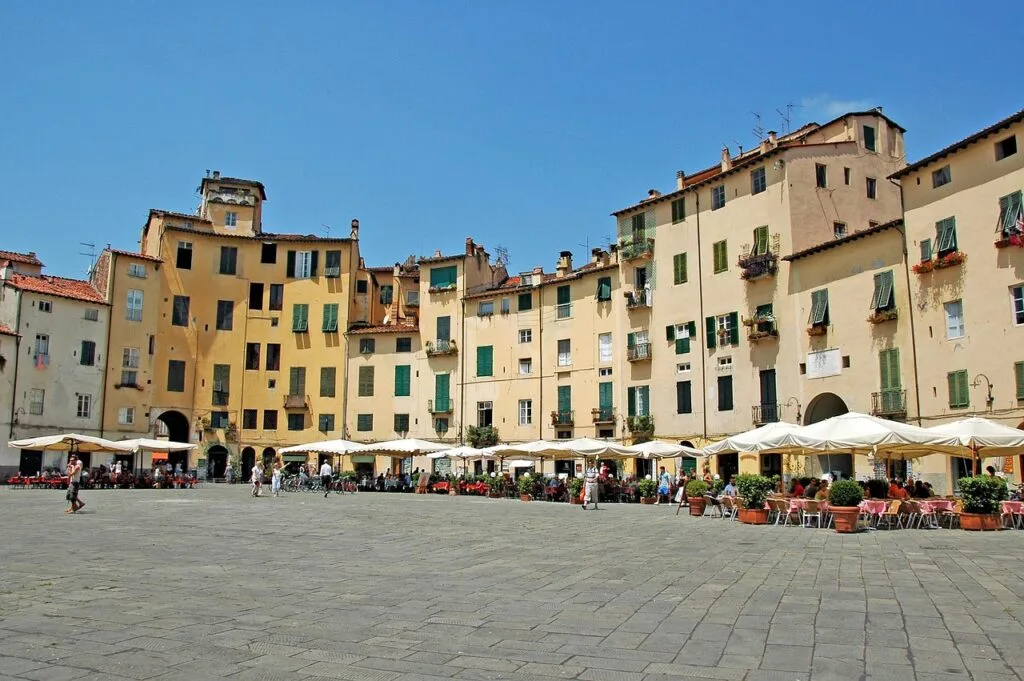
Piazza dell’Anfiteatro – Address: Piazza dell’Anfiteatro, 55100 Lucca LU, Italy. Once a Roman amphitheatre, the Piazza dell’Anfiteatro retains its elliptical shape and colorful facades. Today it’s a lively square lined with cafés, enotecas and small shops — ideal for a terrace coffee while you watch locals and tourists go by. Access to the piazza is free; expect espresso prices of €1–€2 at the bar and €3–€6 seated at a table.
Torre Guinigi – Address: Via Sant’Andrea, 39, 55100 Lucca LU, Italy. Torre Guinigi is probably Lucca’s best-known tower thanks to the tiny oak garden on its rooftop. Climbing the 230 steps (a narrow spiral staircase) rewards you with sweeping views over rooftops, the cathedral and surrounding hills. Hours: usually 9:00am–9:00pm (seasonal). Price: around €6–€8 per adult. Access can be limited at peak times or in bad weather.
Shopping streets and crafts: Nearby you’ll find Via Fillungo and Via San Paolino, two main shopping streets with fashion boutiques, bookshops, local artisans and ceramic stores. For quality souvenirs, look for woodworking studios, leather shops and small art galleries. Prices vary widely: a basic magnet or postcard costs under €5, while a leather piece from a local artisan can range from €50 to €200 depending on quality.
Practical tips: To avoid the busiest times at Torre Guinigi, go early in the morning or just before closing. For an iconic photo, grab a spot on a terrace at Piazza dell’Anfiteatro at sunset. The shopping streets are perfect for a midday break; try local specialties like torta co’ bischeri (a traditional cake) in a pasticceria. Note that many small shops may close between 1:00pm and 4:00pm for a siesta, especially outside the high season.
Click here to book a walking highlights tour of Lucca
Palaces, Gardens and Museums: Palazzo Pfanner and More
Palazzo Pfanner – Address: Via degli Asili, 33, 55100 Lucca LU, Italy. Palazzo Pfanner is a Baroque palace famous for its formal Italian garden and collection of historical furnishings. The gardens and courtyard are highly photogenic, and inside you’ll find antique medical instruments and frescoes. Hours: typically 9:30am–6:30pm (check high season). Admission: around €6 for the palace and gardens. The museum is a treat for those who enjoy local history and architecture.
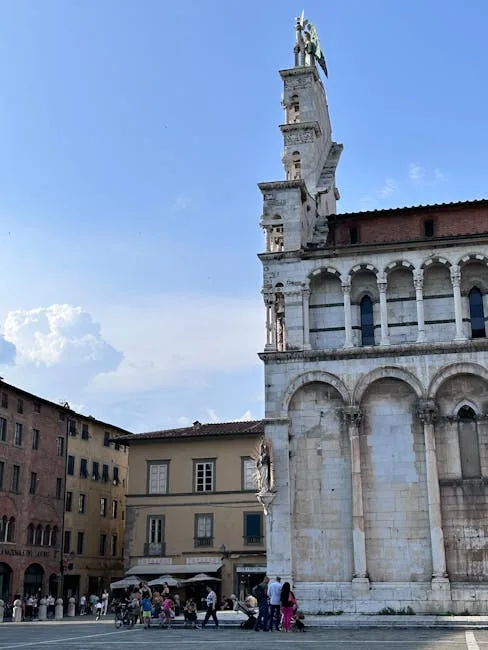
Other museums and sites: – Museo Nazionale di Palazzo Mansi (Via Galli Tassi, 43, 55100 Lucca LU) displays paintings and furniture; usually open 9:00am–9:00pm, entry around €6–€8. – Chiesa di San Michele in Foro (Piazza San Michele, 55100 Lucca LU) is an exuberantly sculpted church whose exterior is especially photogenic. – Torre delle Ore (Torre delle Ore, Via Fillungo, 55100 Lucca LU) is another tower offering high views after a fairly steep climb. Price: roughly €5–€7; hours vary.
Gardens and breaks: After Palazzo Pfanner, wander toward small squares like Piazza San Frediano, home to the church of San Frediano (Piazza San Frediano, 55100 Lucca LU) with its exterior mosaics. These spots are perfect for lunch or an aperitivo. Local trattorie offer classic Tuscan dishes: pappardelle al ragù, farro soup, or a simple bruschetta. Lunch budget: expect €12–€20 per person at a typical trattoria (excluding wine).
Practical tips: Buy combined tickets where available to save money (for example, joint museum + tower tickets). If you have a regional museum pass, check whether it covers any Lucca sites. Photographers will love Palazzo Pfanner’s gardens early morning or late afternoon when the light is softer. Carry coins for smaller museums — some ticket desks don’t accept cards for low-value transactions off-season.
Click here to book a private guided tour of Lucca
Final Practical Tips: Eating, Toilets, Transport and Safety
Food and cafés: For a quick coffee, look for a bar marked « Caffè » on Via Fillungo or around Piazza San Michele. An espresso at the counter usually costs €1–€1.50; seated, €2–€4. For lunch, try a trattoria such as Antica Trattoria da Gesuino (local examples — check current address) or an enoteca for local wine tastings. A full meal will typically range from €15 to €40 depending on the restaurant and whether you include wine. For dessert, don’t miss artisanal gelato; expect €2–€4 for one or two scoops.
Public toilets and amenities: Public restrooms in the historic center are limited; prefer museum toilets (often reserved for visitors) or toilets in cafés where you may be asked to purchase something. Pharmacies (Farmacia) often point to nearby public conveniences. Carry small change for pay toilets (usually €0.50–€1).
Transport and parking: The medieval core is pedestrianized; arrive on foot from the station (Stazione di Lucca, Piazza Ricasoli, 55100 Lucca LU) or by bike. From the station it’s a 10–15 minute walk to Piazza San Martino. Parking inside the center is limited and paid (ZTL – limited traffic zones). If you’re driving, use an outer parking lot near the walls like Parcheggio Mazzini (Viale Giuseppe Giusti, etc.) or one of the paid lots near the gates, then enter on foot.
Click here to book a city bike rental for the day
Safety and manners: Lucca is generally safe, but as in any tourist spot keep an eye on your belongings, especially on busy shopping streets. Respect the tranquility of religious sites: no flash photography if it’s forbidden, and dress appropriately. Local markets and artisan fairs are great places to buy direct from makers.
Conclusion
This walking route through Lucca’s medieval center is meant to give you a coherent, immersive view of a Tuscan town where every stone breathes history. Start with a relaxing walk on the walls, step into the solemnity of the Cathedral of San Martino and climb Torre Guinigi for a unique outlook, and you’ll experience the many faces of Lucca: urban defense, medieval piety, palazzo elegance and lively civic life. The exact addresses — Piazza San Martino, Via Sant’Andrea 39, Piazza dell’Anfiteatro, Via degli Asili 33 — let you plan your route down to the last detail.
Keep your schedule flexible: opening hours change by season, and spontaneous pauses (a tasting, a chat with an artisan, a street concert) are what make the visit memorable. The prices listed (museum and tower entries around €4–€8, meals starting at about €12) are practical references for budgeting, but special events or temporary exhibitions can alter costs. Always check official monument sites if you have strict time constraints or are traveling in low season.
And leave room for the unexpected: wander down small side streets, step into a lesser-known church, try a forgotten local specialty or simply sit on a bench along the walls to watch the light change. Lucca often reveals itself in these quiet, unplanned moments. If you come back, consider a musical tour (Lucca is the birthplace of composer Puccini) or explore the surrounding hills to deepen your Tuscan immersion. Enjoy the walk — Lucca has a way of turning a simple stroll into a lasting memory.
Click here to book a musical tour with the Puccini museum